how do hybrid cars work
Hybrid cars have gone from a niche curiosity to one of the most practical choices on the market. Models like the Toyota Prius, Honda CR-V Hybrid, Ford Escape Hybrid, and dozens of others now account for millions of vehicle sales each year in the United States alone. Yet despite their popularity, the technology inside a hybrid is still a mystery to many drivers — which is worth fixing, because understanding how a hybrid car works helps you drive one more effectively, maintain it more confidently, and make a better-informed decision when buying.
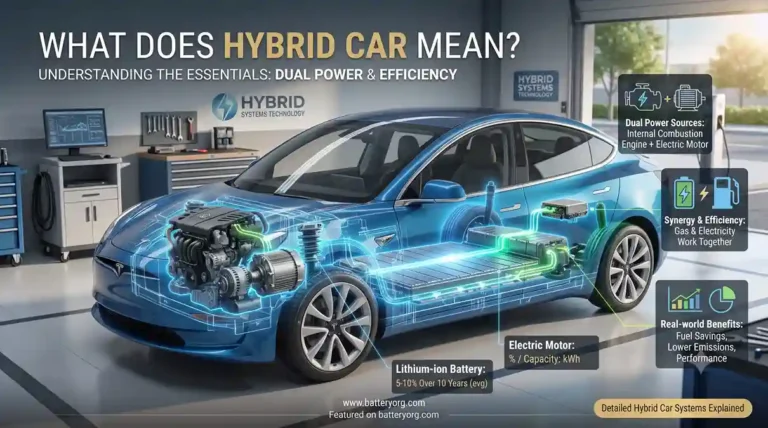
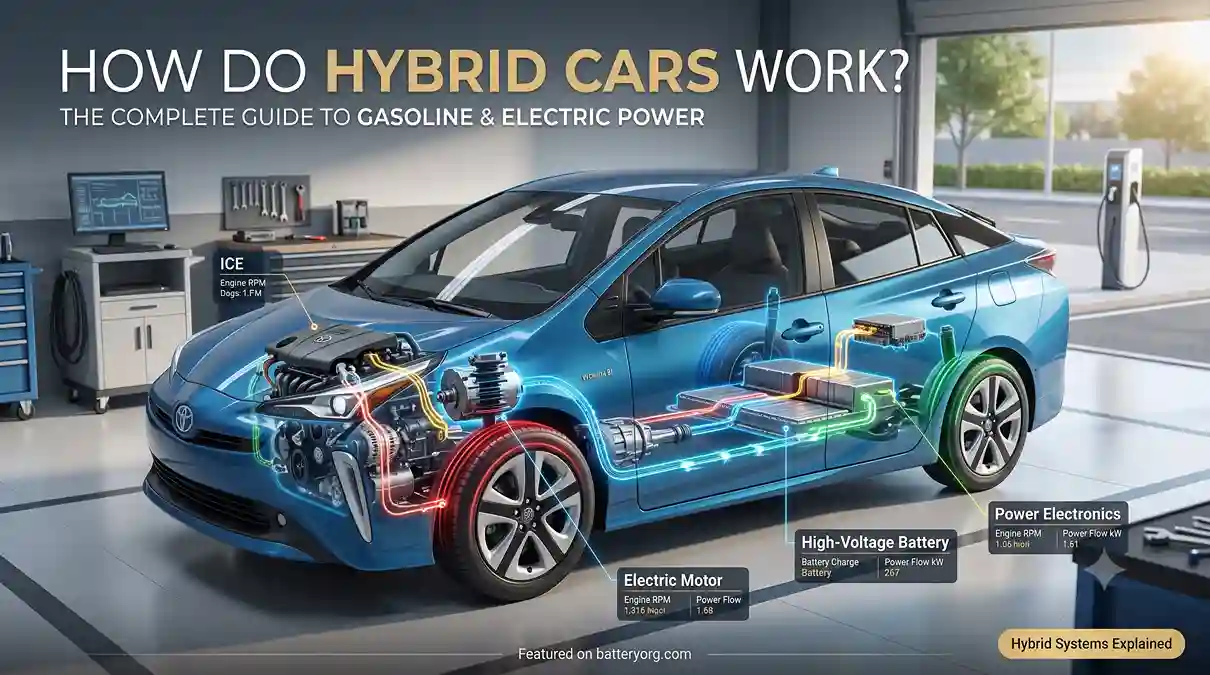
At the most basic level, a hybrid combines an internal combustion engine with one or more electric motors and a battery pack. The system intelligently shifts between these power sources depending on driving conditions, recovering energy that conventional cars simply throw away as heat. The result is significantly better fuel economy, particularly in city driving, without the range limitations of a fully electric vehicle. The full picture is considerably more interesting than that summary suggests.
The Core Components of a Hybrid Vehicle
Every hybrid vehicle — regardless of brand or configuration — contains the same fundamental building blocks. What differs is how those components are connected and how the control system decides which one to use at any given moment.
The Internal Combustion Engine
The gasoline engine in a hybrid is typically smaller and more efficient than the engine in a comparable conventional vehicle. This is deliberate. Because the electric motor provides supplemental power during heavy demand — acceleration, hill climbing, overtaking — the engine does not need to be sized for peak output alone. It can be optimized for its most efficient operating range instead.
Many hybrid engines also use the Atkinson cycle rather than the more common Otto cycle found in conventional gasoline engines. Atkinson cycle engines sacrifice some low-end torque in exchange for significantly better thermal efficiency — a trade-off that makes sense in a hybrid because the electric motor compensates for the torque deficit during acceleration.
The Electric Motor and Generator
Hybrid vehicles use electric motors that can operate in two directions. When electricity flows into them, they function as drive motors, converting stored electrical energy into mechanical torque to move the vehicle. When mechanical force is applied to them — as happens when the vehicle is coasting or braking — they reverse their function and operate as generators, converting kinetic energy back into electricity.
This dual role is what makes the hybrid system so efficient. The motor provides propulsion when it is most effective and recovers energy when it would otherwise be wasted. Some hybrids use a single motor-generator unit; more sophisticated systems like Toyota’s Hybrid Synergy Drive use two, giving the control system more flexibility in how power is split and recovered.
The Traction Battery
The battery in a full hybrid or plug-in hybrid is a high-voltage pack — typically nickel-metal hydride (NiMH) in older Toyota and Honda hybrids, and lithium-ion in most newer systems. It stores the electrical energy that the motor draws on for propulsion and receives energy recovered through regenerative braking.
Unlike the 12-volt lead-acid battery that starts a conventional engine and powers accessories, the traction battery in a hybrid operates at voltages ranging from around 150 volts in simpler systems to over 300 volts in more powerful ones. It is actively managed by the vehicle’s energy management system to stay within a specific state-of-charge window — rarely fully charged, rarely fully depleted — which is precisely the usage pattern that maximizes the long-term lifespan of rechargeable battery chemistry.
The Power Control Unit and Energy Management System
The component that ties everything together is the power control unit — a sophisticated electronics package that converts electrical power between different voltage levels, controls the flow of energy between the battery, motors, and engine, and makes real-time decisions about which power source to use based on vehicle speed, driver demand, battery state, and dozens of other variables. Drivers experience this as a seamless, automatic system. Under the hood, it is performing complex power management calculations continuously.
Regenerative Braking: The Key to Hybrid Efficiency
Of all the technologies in a hybrid vehicle, regenerative braking is the one that most clearly illustrates the difference in approach between a hybrid and a conventional car.
In a conventional vehicle, slowing down means applying friction brakes — pressing brake pads against rotors to convert kinetic energy into heat, which dissipates uselessly into the air. This energy is gone. In a hybrid, the same deceleration event triggers the electric motor to switch into generator mode. As the vehicle’s momentum spins the motor, it generates electricity that charges the traction battery. The resulting electromagnetic drag helps slow the vehicle — reducing the demand on the friction brakes — while simultaneously recovering energy that will be used to drive the car again moments later.
This is why hybrid vehicles show their greatest fuel economy advantage in urban driving. Stop-and-go city traffic is exactly the pattern that generates the most braking events and the most regeneration opportunities. Highway driving at a constant speed offers fewer chances to recover energy, which is why hybrid fuel economy ratings are often higher for city driving than for highway driving — the reverse of conventional vehicles.
The friction brakes are still present and functional in every hybrid. The regenerative system handles light to moderate deceleration, while the friction brakes are blended in automatically for harder stops. Drivers generally cannot feel the transition — it is managed transparently by the brake-by-wire system that coordinates both braking methods simultaneously.
Types of Hybrid Systems and How They Differ
Not all hybrids work the same way. The term covers a range of configurations that offer different levels of electrification and different driving experiences.
Mild Hybrid (MHEV)
The mildest form of hybridization uses a small electric motor — usually operating at 12 or 48 volts — to assist the engine during acceleration and to power accessories that would otherwise burden the engine. A mild hybrid cannot propel the vehicle on electricity alone. The motor provides assistance rather than independent propulsion.
The benefit is improved fuel economy at relatively low cost and complexity. Many mainstream vehicles now come with mild hybrid systems as standard equipment without the manufacturer heavily promoting the feature. If your car has a 48V battery system and an engine start-stop function that is smoother than typical, it may well be a mild hybrid.
Full Hybrid (HEV)
A full hybrid — also called a self-charging hybrid — has a large enough battery and powerful enough motor to propel the vehicle on electricity alone at low speeds. In stop-and-go urban traffic, a full hybrid may run entirely on the electric motor, with the gasoline engine shut off, for meaningful stretches of time. The transition between electric and gasoline operation is handled automatically and is typically imperceptible to the driver.
No external charging is required. The battery charges through regenerative braking and, when needed, through the engine driving the generator. Full hybrids from Toyota, Honda, and Hyundai represent the most common type on American roads today.
Plug-In Hybrid (PHEV)
A plug-in hybrid adds a significantly larger battery to the full hybrid formula, giving it an all-electric range that typically falls between 20 and 50 miles depending on the model. Within that electric range, the vehicle operates as a pure EV — no gasoline consumed, zero tailpipe emissions. Once the battery is depleted, the system reverts to standard hybrid operation, with the gasoline engine taking the primary role.
PHEVs require charging from an external power source — a home charger, a workplace outlet, or a public charging station — to access their full electric range. For drivers whose daily commute falls within the electric range and who have access to charging, a plug-in hybrid can significantly reduce fuel consumption. For those who rarely charge it, a PHEV functions essentially as a standard full hybrid with a heavier battery pack.
Series vs. Parallel Hybrid Configurations
Beyond the level of electrification, hybrids differ in how the engine and motor are mechanically connected to the drivetrain.
In a parallel hybrid, both the engine and the electric motor are mechanically connected to the wheels. They can power the vehicle independently or simultaneously. Most full hybrids use a parallel or power-split configuration. In a series hybrid, the engine never directly drives the wheels — it functions only as a generator, charging the battery, which then powers the electric motor that turns the wheels. The Chevrolet Volt used this architecture, and it gives the engine maximum flexibility to run at its most efficient speed regardless of vehicle demands.
Toyota’s Hybrid Synergy Drive, used in the Prius and many other Toyota and Lexus models, uses a power-split device based on a planetary gear set that blends both series and parallel operation seamlessly. Two motor-generators and the engine are connected through this gear set, giving the system the ability to route power in any combination — engine to wheels, engine to generator to motor to wheels, or battery to motor to wheels — continuously and without driver input.
How Honda and Toyota Hybrid Systems Compare
The two most prominent hybrid architectures in the American market come from Toyota and Honda, and they reflect meaningfully different engineering philosophies.
Toyota’s system, used across the Prius, Corolla Hybrid, RAV4 Hybrid, Highlander Hybrid, and others, uses the power-split device described above. It has no traditional transmission — the planetary gear set creates a continuously variable ratio between engine and wheel speed. The result is a smooth, seamless driving experience optimized around maximum efficiency. Toyota’s hybrid battery technology, accumulated over more than two decades of Prius production, is among the most durability-proven in the industry.
Honda’s approach in models like the CR-V Hybrid and Accord Hybrid uses what Honda calls the two-motor hybrid system. In this configuration, the engine primarily acts as a generator at low and medium speeds, with the electric motor driving the wheels. The engine connects directly to the wheels only at higher highway speeds when it can operate most efficiently. This gives the Honda system more of a series hybrid character at urban speeds and more of a parallel character on the highway, with a fixed-ratio gearbox handling the engine-direct connection.
Both systems work extremely well. The right choice depends more on which vehicle model suits your needs than on preferring one hybrid architecture over another.
Hybrid Cars vs. Electric Cars vs. Conventional Cars
Understanding how a hybrid works naturally raises the question of how it compares to the alternatives — a fully electric vehicle and a conventional gasoline car.
A conventional gasoline car is the simplest mechanically and the least expensive to purchase, but it consumes the most fuel and produces the highest emissions. Maintenance includes regular oil changes, spark plug replacement, and upkeep of the exhaust system — components that hybrids and EVs reduce or eliminate.
A fully electric vehicle eliminates the combustion engine entirely. It has the lowest operating costs, the simplest drivetrain, and zero tailpipe emissions, but requires charging infrastructure and has a fixed electric range. For drivers whose daily needs fit within the range and who have reliable charging access, an EV is a compelling choice. For those who regularly drive long distances without predictable charging stops, the range constraint remains a practical consideration.
A hybrid occupies the space between these two options. It delivers fuel economy substantially better than a conventional car, requires no charging infrastructure, and carries none of the range limitations of a pure EV. The trade-off is greater mechanical complexity than either alternative — a hybrid maintains both a combustion drivetrain and an electric one. For most drivers, that complexity is managed invisibly by the vehicle’s systems and rarely affects the ownership experience.
If you are shopping for a vehicle and weighing these options, reviewing the vehicle title documentation on any used hybrid or EV you consider is particularly important — the title’s brand status and lien history tell you things about the vehicle that a test drive cannot. And once you have made a purchase decision, understanding the VIN number location on your new car is one of the first ownership basics worth knowing.
Do Hybrid Batteries Need Special Maintenance?
One of the most common concerns about hybrid ownership is the traction battery — specifically, how long it lasts and what happens when it needs replacement.
The good news is that hybrid traction batteries have proven far more durable in practice than early skeptics predicted. Toyota warrants its hybrid battery for eight years or 100,000 miles in most states, and ten years or 150,000 miles in California-emission states. Real-world data shows many Prius taxis and fleet vehicles accumulating 200,000 to 300,000 miles on original battery packs with only modest performance degradation. Honda’s warranty terms are similar.
The battery management system deserves much of the credit. By keeping the battery within a carefully controlled state-of-charge range — never allowing it to fully charge or fully deplete during normal operation — the system avoids the deep-cycling stress that shortens battery life in other applications. The hybrid battery essentially spends its entire service life in the middle of its usable range, which is precisely where rechargeable battery chemistry is most durable.
Routine maintenance on a hybrid is generally simpler than on a conventional car. The friction brakes last longer because regenerative braking handles most light deceleration. Engine oil change intervals may be extended compared to conventional vehicles. The 12-volt auxiliary battery — a separate, conventional lead-acid battery that powers accessories and computers — still follows a typical three-to-five-year replacement cycle and is entirely separate from the high-voltage traction battery.
Is a Hybrid Car Right for You?
A hybrid makes the most practical sense for drivers who do significant city or suburban driving, cover moderate annual mileage, and want better fuel economy without the commitment of EV charging infrastructure. The fuel savings accumulate meaningfully in stop-and-go conditions where regeneration is most effective.
High-mileage highway drivers see smaller gains, since constant-speed highway cruising offers fewer braking events and less regeneration opportunity. In that usage pattern, the fuel economy advantage over a comparable efficient gasoline vehicle narrows considerably.
For anyone considering a used hybrid, running a vehicle history report using the VIN and reviewing the service records for any traction battery work is worthwhile due diligence. Most reputable dealers can provide documentation of battery health, and independent hybrid specialists can perform a battery capacity test if you want an objective measurement before purchase. Additional automotive ownership resources — including road sign guides and vehicle documentation basics — are available at BatteryOrg.
For a broader view of which hybrids and conventional vehicles have proven most dependable over time, a Google search for the most reliable hybrid cars will surface current reliability rankings from consumer organizations and automotive publications that track long-term ownership data.
Frequently Asked Questions
Do hybrid cars need to be plugged in?
Standard full hybrids do not need to be plugged in. They charge their traction battery automatically through regenerative braking and the engine-driven generator while driving. Plug-in hybrids (PHEVs) are designed to be plugged in and have a larger battery that enables extended all-electric driving — but they will still function as a standard hybrid if you never plug them in, just with reduced fuel economy compared to their plugged-in potential.
How does a hybrid car save fuel?
Hybrid cars save fuel in several interconnected ways. The electric motor assists the engine during acceleration, reducing the engine load and fuel demand. At low speeds and light loads, the engine shuts off entirely and the motor drives the car on battery power alone. Regenerative braking recovers energy that would otherwise be lost as heat in friction brakes, converting it back into electricity for later use. The engine itself is often tuned for efficiency rather than peak power. Together, these factors produce fuel economy gains of 30 to 50 percent compared to comparable conventional vehicles in typical urban driving.
Are hybrid cars expensive to repair?
Routine maintenance on a hybrid is generally comparable to or cheaper than a conventional car. Brake pads last longer because regenerative braking does most of the work. Oil changes are less frequent on some models. The main cost concern is the high-voltage traction battery, but modern hybrid batteries have proven highly durable in practice — most last well beyond the manufacturer warranty period. If a traction battery does eventually need replacement, the cost has dropped significantly as the technology has matured, and third-party reconditioned battery options are now widely available for high-volume models like the Prius.
What is the difference between a hybrid and an electric car?
A hybrid combines a gasoline engine with an electric motor and a relatively small battery. It does not rely solely on electricity and requires no external charging (except plug-in hybrids). An electric vehicle has no combustion engine — it runs entirely on electricity stored in a large battery pack and must be charged from an external source. EVs have lower operating costs and zero tailpipe emissions, but require access to charging infrastructure and have a fixed electric range. Hybrids offer a middle path — better fuel economy than gasoline cars with no range limitations or charging requirements.
How long does a hybrid car battery last?
Most hybrid manufacturers warranty the traction battery for eight years or 100,000 miles, with extended warranties in California-emission states. In practice, many hybrid batteries outlast these warranty periods considerably. High-mileage fleet vehicles and taxis using Toyota Prius models have routinely achieved 200,000 miles or more on original battery packs. The battery management system’s practice of keeping the battery within a narrow, mid-range state of charge during normal operation is the primary reason for this longevity — it avoids the deep-cycling stress that degrades other rechargeable battery applications.
Conclusion
Understanding how hybrid cars work removes the mystery from a technology that millions of drivers use every day without fully appreciating what is happening under the hood. A hybrid is not simply a car with an extra battery — it is a system that continuously balances two fundamentally different power sources, recovers energy that a conventional vehicle discards, and manages all of this invisibly while the driver focuses on the road ahead.
Whether you are considering your first hybrid purchase, trying to understand the vehicle you already own, or comparing hybrid options against electric and conventional alternatives, the core principles are the same across every brand and configuration: a smaller, more efficient engine combined with an electric motor, a battery that charges itself while you drive, and a control system intelligent enough to extract maximum efficiency from every mile. That combination is why hybrid vehicles continue to grow in popularity — and why they will remain a central part of the automotive landscape for years to come.