where to find car vin number?
Most drivers have heard the term VIN number, and most have needed it at least once — when buying insurance, registering a new vehicle, filing a warranty claim, or running a used car history check. Yet a surprising number of people have no idea where to look for it when the moment actually arrives. It is not always obvious, and depending on the vehicle, the location can vary.
This guide covers exactly where to find your car VIN number across every common and less common location — on cars, trucks, SUVs, and motorcycles — as well as on your documents and digital records. It also explains what the number actually means, why it matters more than most people realize, and how to use it to protect yourself whether you are buying, selling, insuring, or simply maintaining a vehicle.
What Is a VIN Number?
A Vehicle Identification Number, or VIN, is a unique 17-character alphanumeric code assigned to every motor vehicle manufactured for sale after 1981. Think of it as a fingerprint for your car — no two vehicles in the world share the same VIN. The standardization was introduced by the National Highway Traffic Safety Administration (NHTSA) in the United States, and it brought consistency to a system that had previously varied by manufacturer.
Before 1981, VINs existed but were shorter and inconsistently formatted, sometimes running just 11 to 13 characters with no universal structure. If you own a classic or vintage vehicle, the number may be harder to locate and shorter than the modern 17-character standard.
Every character in the VIN carries meaning. The first three digits form the World Manufacturer Identifier (WMI), identifying the country of manufacture and the automaker. Positions four through eight make up the Vehicle Descriptor Section (VDS), encoding body style, engine type, and model. Position nine is a mathematical check digit used to verify the VIN’s authenticity. Position ten identifies the model year, position eleven indicates the assembly plant, and positions twelve through seventeen form the unique serial number that distinguishes your specific vehicle from every other one off the same production line.
One detail worth remembering: VINs never include the letters I, O, or Q, because they look too much like the numbers 1, 0, and 9. If you ever see those letters in a VIN you are reading, something is wrong.
Where to Find the VIN Number on Your Car
Manufacturers are required to stamp or affix the VIN in at least one location visible from the outside of the vehicle without any disassembly. In practice, most vehicles have it in several places, which makes it easier to cross-reference and harder to tamper with undetected.
Driver’s Side Dashboard (Most Common)
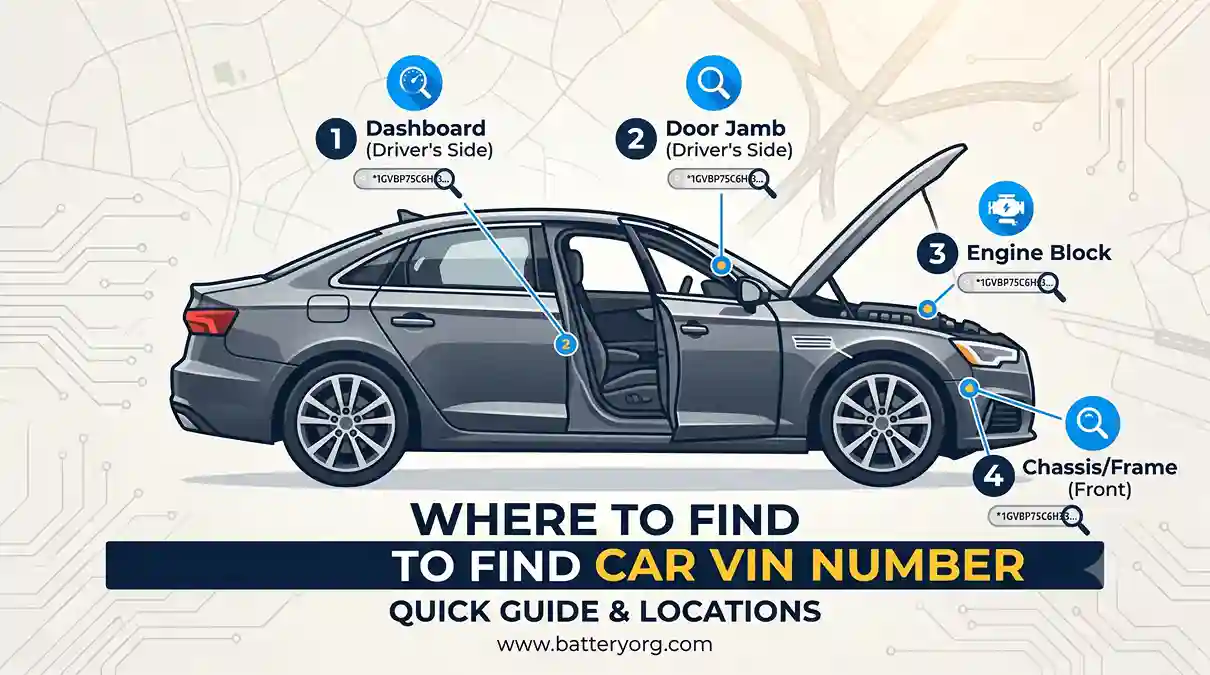
The most reliably consistent place to find the VIN on any modern car is at the base of the windshield on the driver’s side. Stand outside the vehicle and look through the glass at the lower corner of the dashboard where it meets the windshield frame. You will typically see a small metal plate — sometimes called a VIN plate — with the 17-character code clearly printed or etched on it.
This location is mandated by federal regulation, which is why it is so consistent across manufacturers. It is visible from outside the car without opening anything, making it easy for law enforcement, insurance adjusters, and prospective buyers to verify quickly.
Driver’s Side Door Jamb or Door Post
Open the driver’s side door and look at the area where the door latches against the vehicle body. This is called the door jamb or door post. In most vehicles built after the mid-1990s, you will find a sticker here containing not just the VIN but also the production date, the Gross Vehicle Weight Rating (GVWR), tire inflation recommendations, and federal safety certification information.
The sticker in the door jamb is often easier to read than the dashboard plate because it is at eye level and printed in larger text. If you are running a quick VIN check or giving the number over the phone, this is usually the most convenient spot.
Engine Compartment
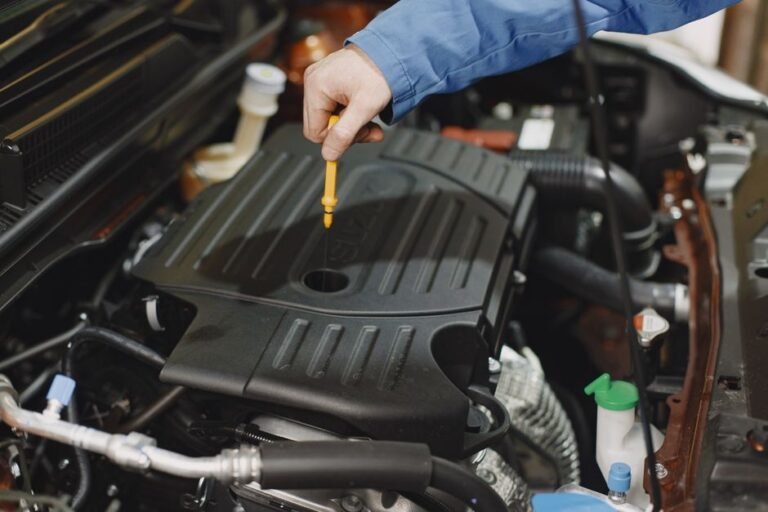
Pop the hood and look at the firewall — the metal panel that separates the engine bay from the passenger cabin. Many manufacturers stamp the VIN directly into the firewall, or affix a secondary plate near it. It can also appear on the engine block itself or near the top of the radiator support.
This location is particularly relevant when inspecting a used vehicle for potential tampering. If the dashboard VIN plate appears to have been removed and replaced, or if the door jamb sticker looks altered, comparing it with the firewall stamp is a useful verification step. Legitimate vehicles will show the same number across all locations.
Radiator Support Under the Hood
Some manufacturers, particularly certain Japanese and European brands, place an additional VIN sticker or plate on the radiator support crossmember at the front of the engine bay. This area is visible when the hood is open and tends to be in a relatively protected spot that resists weather damage over time.
Trunk or Spare Tire Well
In sedans and some hatchbacks, manufacturers occasionally stamp the VIN inside the trunk, often in the spare tire storage area. Lift the floor mat covering the spare and look at the surrounding metal surfaces. This is less common than dashboard or door jamb placement, but it is worth checking if the primary locations are worn or unclear.
Rear Wheel Well
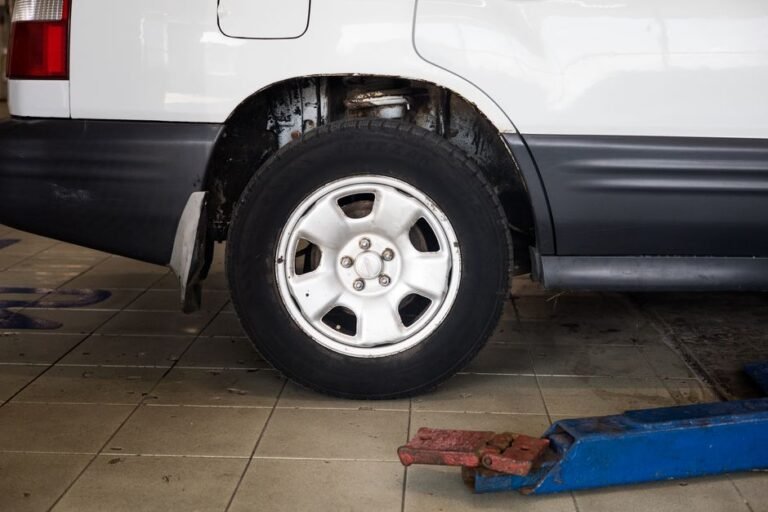
A less commonly known but legitimate VIN location on some vehicles is inside or near the rear wheel well. Depending on the make and model, the number may be stamped into the inner fender area, though this spot is more prone to road debris and corrosion and is typically a secondary location rather than the primary one.
Where to Find the VIN on a Truck or SUV
Trucks and SUVs generally follow the same primary locations as passenger cars — dashboard, door jamb, and engine compartment — but their larger frames add a few additional spots worth knowing about.
On pickup trucks, the VIN is frequently stamped directly onto the chassis or frame rails underneath the vehicle. You may need to crouch down and look along the frame running beneath the cab toward the front axle. This is a particularly important check on older trucks where surface rust can make other VIN plates harder to read.
SUVs built on a body-on-frame platform will also often carry a frame stamp. Full-size SUVs like the Chevrolet Suburban, Ford Expedition, and Toyota Land Cruiser are good examples. Check the driver’s side frame rail near the front wheel well for this additional stamp.
Where to Find the VIN on a Motorcycle
Because motorcycles have significantly smaller frames than cars, VIN placement follows a different logic. The most common location on a motorcycle is the steering head — the part of the frame through which the fork passes and to which the handlebars are attached. Turn the handlebars to one side to expose the neck of the frame and look for the stamped number on the metal itself.
Depending on the make and model, the VIN may also appear on a sticker beneath the seat, on the main frame tubes, or on the engine case. Older motorcycles may have shorter VINs in different positions, so checking the owner’s manual for your specific model is worthwhile if you are having trouble locating it.
Finding Your VIN on Documents
If you cannot read the physical VIN on the vehicle — perhaps because of surface rust, a worn plate, or an awkward viewing angle — your paperwork will always have it recorded in full.
Vehicle Title
The certificate of title is a legal ownership document issued by your state’s Department of Motor Vehicles. It always lists the full 17-character VIN. This is the most authoritative document reference for the number, and it is particularly useful when the physical VIN on the car is damaged or illegible.
Vehicle Registration
Your registration card, which you are legally required to keep in the vehicle, includes the VIN. This makes it an immediately accessible backup even when you are sitting inside the car and cannot easily read the dashboard plate or door sticker.
Insurance Policy and Insurance Card
Every insurance policy lists the VIN for each covered vehicle. Your insurance card — the small card you carry as proof of coverage — also typically includes it. If you need the VIN quickly and your documents are at hand, this is often the fastest route.
Service and Repair Records
Any time a dealer, mechanic, or service shop performs work on your vehicle, the VIN appears on the work order and the resulting service record. If you have kept your maintenance history, any of those documents will carry the number.
How to Find Your VIN Without the Car in Front of You
There are situations where you need the VIN but do not have physical access to the vehicle — if your car is in the shop, for example, or if you are in the process of buying a vehicle you have not yet picked up.
Your insurance company can provide the VIN for any vehicle currently on your policy. Your bank or lender, if you financed the vehicle, will also have it on record as part of the loan agreement. If the vehicle was purchased from a dealership, the dealer’s records will carry it as well.
For prospective buyers researching a vehicle before purchase, the seller is required to disclose the VIN, and you can look up its history before committing to anything. The NHTSA’s free VIN decoder tool is a reliable starting point — it is government-operated, accurate, and completely free to use.
Why Your VIN Number Matters More Than You Think
The VIN is far more than an administrative formality. It is the thread that connects a vehicle’s physical identity to its entire documented history, and using it properly can prevent costly mistakes.
Vehicle History Reports
Running a VIN through a vehicle history report service reveals information that no amount of visual inspection can surface: previous accident reports, insurance claims, title brands such as salvage, flood, or lemon designations, odometer readings over time, and the number of previous owners. This is essential due diligence for anyone purchasing a used vehicle.
The NHTSA’s recall database is another critical free resource. Enter any VIN at NHTSA.gov and you will see whether any open safety recalls apply to that specific vehicle. Recalls are repaired free of charge at authorized dealerships, but only if the owner knows about them. Many used car buyers inherit vehicles with outstanding recalls simply because they never checked.
Theft Recovery and Anti-Tampering
VINs serve as a fundamental anti-theft tool. Authorities use them to identify stolen vehicles and reunite them with rightful owners. If a VIN has been altered, removed, or replaced — a common technique used to launder stolen cars — it is illegal and an immediate red flag. Checking that the VIN matches across the dashboard plate, door jamb sticker, firewall stamp, and title is a basic but important safety step when buying any used vehicle.
VINs and Electric Vehicle Battery Tracking
For electric vehicle owners and buyers, the VIN has taken on an additional layer of significance. Modern EV diagnostics link battery health data directly to the vehicle’s VIN, making it possible to request a State of Health (SoH) report that objectively measures how much of the original battery capacity remains. Because EV batteries degrade gradually and are not always accurately represented by the dashboard’s State of Charge display, a VIN-linked battery health report is a genuinely useful tool for evaluating a used EV’s value and longevity. You can explore more about EV battery health and automotive technology at BatteryOrg.
Recall Alerts and Safety Compliance
Manufacturers issue recalls when they discover defects that affect safety, emissions compliance, or performance standards. The VIN allows NHTSA and manufacturers to identify exactly which vehicles within a production run are affected. Not every car with the same model name is subject to the same recall — the VIN narrows it down to the specific build configuration, manufacturing batch, and even the plant where that individual vehicle was assembled.
Tips for Reading and Recording Your VIN Accurately
A few practical points to keep in mind when locating and transcribing your VIN:
- Always record the VIN in good lighting. The dashboard plate in particular can be difficult to read on sunny days due to glare, or in dim conditions.
- Double-check characters that are easy to confuse — particularly 8 and B, 0 and D, and 5 and S. Since I, O, and Q are never used, any occurrence of those letters signals a transcription error.
- Cross-reference the number from at least two locations — ideally the dashboard plate and the door jamb sticker — to confirm accuracy.
- Photograph the VIN plate when buying or inspecting a used vehicle. Most smartphones can read the text clearly from a close-up photo, giving you a reliable record without relying on manual transcription.
- Store your VIN in a secure digital note or password manager, along with your insurance policy number and registration details. Having it readily available saves significant time in emergencies.
Frequently Asked Questions
Where is the VIN number located on a car?
The most universally consistent location is the driver’s side dashboard, visible through the windshield at the base of the glass. The second most common location is the driver’s side door jamb sticker, found when you open the driver’s door. Additional locations include the engine firewall, trunk area, and vehicle documents such as the title and insurance card.
Can I find my car’s VIN number without looking at the car itself?
Yes. Your vehicle registration, certificate of title, and insurance policy all list the full VIN. If you financed the vehicle, your lender also has it on file. You can also contact your insurance company or the selling dealership if you need the number quickly.
What do the digits in a VIN number mean?
Each position in the 17-character VIN encodes specific information. The first three characters identify the country and manufacturer. Characters four through eight describe the model, body style, and engine. Character nine is a check digit for authenticity verification. Character ten indicates the model year, character eleven identifies the assembly plant, and characters twelve through seventeen form the unique serial production number.
How can I check if a VIN number is valid or if a vehicle has been stolen?
The NHTSA offers a free VIN decoder at vpic.nhtsa.dot.gov that confirms manufacturer data. For theft checks, the National Insurance Crime Bureau (NICB) provides a free VINCheck service at nicb.org. For comprehensive accident, title, and ownership history, paid services like CARFAX or AutoCheck pull data from insurance and law enforcement databases.
Why would the VIN numbers not match across different locations on the same car?
In a legitimate vehicle, the VIN should be identical across every stamped or printed location and on all official documents. If the numbers do not match, it could indicate a data entry error at the DMV or insurance company — in which case the paperwork should be corrected — or it could indicate that parts have been swapped between vehicles or that the vehicle has been tampered with. Any discrepancy warrants further investigation before purchasing or insuring the vehicle.
Conclusion
The VIN number is one of the most practically important pieces of information associated with any vehicle, and knowing where to find your car VIN number takes less than a minute once you know where to look. Start at the driver’s side dashboard through the windshield, then check the door jamb sticker if you need a clearer read. For trucks and SUVs, the chassis frame adds one more useful location. For motorcycles, the steering head is the standard starting point.
Beyond the physical vehicle, your registration, title, and insurance documents always carry the number in full. And once you have it, the VIN becomes a gateway to vehicle history reports, open recall checks through NHTSA, theft verification, and — for electric vehicle owners — battery health data tied directly to your car’s specific production record.
Whether you are buying a used car, renewing insurance, or simply keeping your records organized, having your VIN easily accessible is a small habit that can prevent significant problems. Take a moment to locate yours today and store it somewhere you can retrieve it without scrambling.