What Are the Most Reliable Cars in 2026? Top Picks Ranked
Car repairs aren’t getting any cheaper, and neither is the average new car. So when people ask what are the most reliable cars on the market right now, they’re really asking a money question: which vehicle will cost the least in surprise repairs over the next decade?
The good news is that reliability data has never been more available. Consumer Reports surveys hundreds of thousands of owners every year. J.D. Power tracks problems after three years of ownership. iSeeCars crunches odometer data from hundreds of millions of vehicles to see which ones actually make it to 200,000 miles. Put those three lenses together, and a clear picture emerges.
This guide pulls from all of that research to answer the question properly — not just which brands sound trustworthy, but which specific models, used cars, and electric vehicles have the numbers to back it up.
What Makes a Car Reliable, Anyway?
Reliability isn’t luck. It comes down to a handful of engineering and business decisions automakers make long before a car reaches a dealer lot.
Shared platforms and parts. Brands like Toyota and Lexus, or Honda and Acura, reuse engines, transmissions, and electronics across multiple models. Fewer unique parts means fewer places for something to go wrong, and mechanics see the same components often enough to fix them quickly.
Conservative redesigns. Automakers that make small, incremental changes to a proven design tend to avoid the “teething problems” that come with an all-new platform. Automakers that swing for the fences with a brand-new engine, transmission, and body structure all at once — as Mazda did with its CX-70 and CX-90 — often pay for it in owner complaints for a year or two.
Powertrain complexity. A gas engine has had over a century to get sorted out. Hybrids, which pair a gas engine with an electric motor, have had a couple of decades. Plug-in hybrids and full EVs are newer, with more components that can misbehave, from charging hardware to battery software.
Manufacturing discipline. Two cars can share a platform and still land in different places on a reliability chart, because build quality — panel fit, wiring, paint, software validation — comes down to how tightly a factory controls its process.
It also helps to understand that reliability rankings don’t all measure the same thing. Consumer Reports asks owners about problems in the past 12 months, weighted toward recent model years. J.D. Power’s Vehicle Dependability Study looks specifically at three-year-old vehicles. iSeeCars ignores surveys entirely and instead looks at how many real cars on the road actually reach 200,000 or 250,000 miles. Each answers a slightly different question, and using all three gives a far more complete picture than relying on one list.
What Are the Most Reliable Car Brands?
Consumer Reports’ latest brand rankings, updated in December 2025, draw on owner data from roughly 380,000 vehicles spanning the 2000 through 2025 model years, plus a handful of early 2026 models. Owners report on 20 possible trouble spots, from minor infotainment glitches to major engine or transmission failures.
For the second year running, the same core group of brands sits at the top, though the order shuffled. Toyota reclaimed the number one spot after Subaru held it the year before. Toyota’s improvement came from a redesigned 4Runner, a stronger Tacoma and Tundra, and a new Land Cruiser that all posted solid scores. Subaru landed in second place, led by the Impreza and Crosstrek. Lexus, which shares many components with Toyota, came in third, with the IS sedan rated well above average across the board.
The Top 5 Most Reliable Car Brands, Ranked
- Toyota — Six of its models rank among the ten most reliable vehicles in this year’s survey.
- Subaru — Led by the Impreza and Crosstrek; the three-row Ascent is its weakest performer.
- Lexus — Every current model scores average or better, topped by the IS sedan.
- Honda — The Accord ties Camry for one of the best midsize sedan scores.
- BMW — The only European brand to crack the top 10, powered largely by the 2 Series.
Asian automakers as a group posted an average reliability score of 56 out of 100, well ahead of European brands at 50 and domestic U.S. brands at 41. That gap is real, but it doesn’t mean every American or European model underperforms. Buick, for instance, has quietly become one of the most dependable mass-market brands in the country, according to J.D. Power’s separate dependability study — more on that next.
What Are the Most Reliable Car Manufacturers?
It’s worth separating “brand” from “manufacturer,” because a handful of parent companies actually run several of the brands mentioned above. Toyota Motor Corporation owns both Toyota and Lexus. Honda Motor Co. owns Honda and Acura. Hyundai Motor Group owns Hyundai, Kia, and Genesis, and shares components heavily across all three.
J.D. Power’s 2025 U.S. Vehicle Dependability Study, which measures problems reported by owners after three years of ownership rather than predicted reliability, tells a related but slightly different story. Lexus ranked highest overall for the third year in a row, with a score of 140 problems per 100 vehicles (PP100) — lower is better. Cadillac came in second among premium brands at 169 PP100, and Porsche third at 186. On the mass-market side, Buick topped the list at 143 PP100, with Mazda second at 161 and Toyota third at 162.
General Motors deserves a mention here that competitors often skip. All four GM brands — Buick, Cadillac, Chevrolet, and GMC — landed in the top 10 of J.D. Power’s study, with six models earning top-in-category awards. That’s a meaningful shift for a manufacturer historically associated with mediocre dependability scores.
One caution about shared-platform manufacturers: when something goes wrong, it can spread across every brand that uses the same part. Hyundai, Kia, and Genesis share a charging component called the integrated charging control unit in several of their EVs, and reliability data has flagged it as a recurring weak point in the Ioniq 5, Ioniq 6, Kia EV6, and Genesis GV60.
What Cars Are the Most Reliable?
Brand reputation is a good starting point, but individual models can outperform or underperform their badge. Based on the latest Consumer Reports and J.D. Power data, these are the standout models right now:
- Toyota Crown — The highest-scoring model in Toyota’s lineup this year.
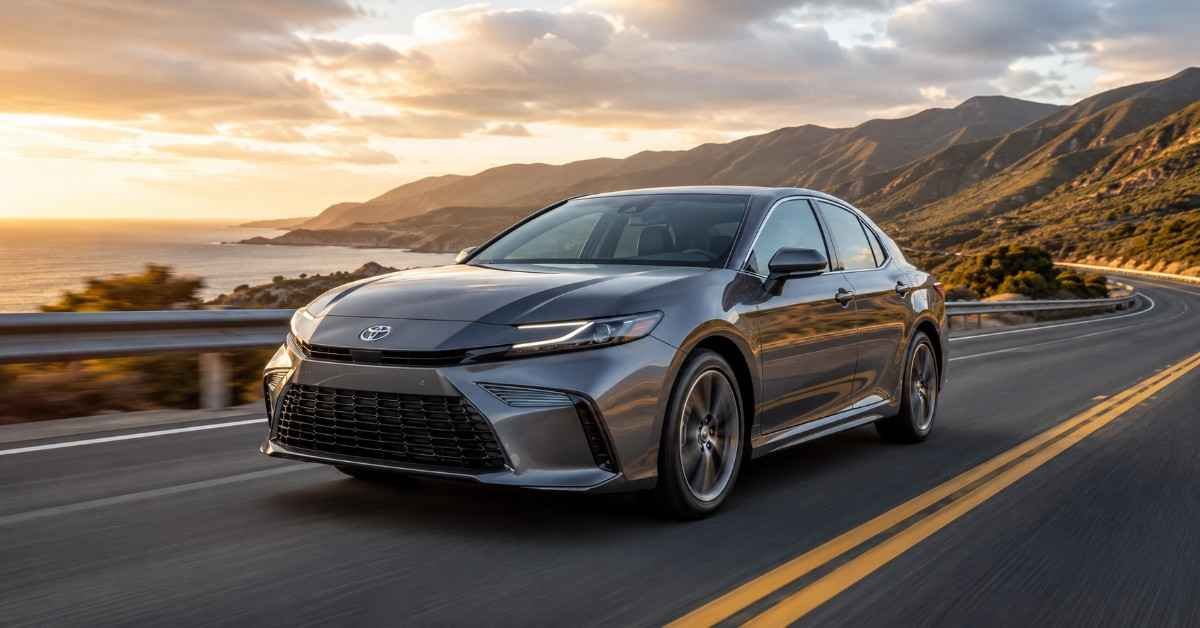
- Toyota Camry — Jumped from a score of 56 to 74 after early redesign issues were ironed out, tying the Honda Accord.
- Honda Accord — Matches the Camry’s score with a well-refined, conservative update cycle.
- Toyota 4Runner and Land Cruiser — Both newly redesigned SUVs posted strong results, bucking the usual “new model, new problems” pattern.
- Lexus IS — Rated well above average, the top individual model in the Lexus lineup.
- Subaru Impreza and Crosstrek — Subaru’s most dependable pair, both above average.
- Toyota Tacoma — Improved from below average to above average within two model years of its redesign, a rare quick turnaround.
Most Reliable Hybrids
Hybrids consistently outperform both gas-only and electrified alternatives in owner surveys, and a few stand out by category: the Ford F-150 Hybrid, Kia Carnival Hybrid, and Toyota Grand Highlander Hybrid each lead their respective vehicle classes. The Honda CR-V Hybrid, Lexus NX Hybrid, and Subaru Forester Hybrid all scored near the top of their categories as well. Only two of roughly 30 hybrids tracked — the Hyundai Sonata Hybrid and Lincoln Nautilus Hybrid — came in below average.
What Are the Most Reliable Used Cars to Buy?
Used-car reliability data works a little differently, since it’s based on how vehicles hold up over years of real-world use rather than recent survey responses. iSeeCars, which studied close to 400 million vehicles, found that Toyota models have a 17.8% predicted chance of reaching 250,000 miles — nearly four times the industry average of 4.8%. Lexus, Honda, and Acura all beat the industry average as well.
Specific used models worth shortlisting include:
- Toyota Corolla — Frequently tops “most reliable used cars” lists thanks to a simple, well-proven drivetrain and inexpensive parts.
- Toyota Camry — A perennial favorite for its low maintenance costs and strong resale value.
- Honda Accord and Civic — Both known for engines that routinely pass 200,000 miles with basic upkeep.
- Subaru Outback — A durable all-wheel-drive wagon with a loyal long-term ownership base.
- Lexus RX — Shares mechanicals with the Toyota Highlander, giving it luxury features with mainstream dependability.
- Toyota Sequoia, Tundra, and Tacoma — All rank among iSeeCars’ top vehicles most likely to hit 250,000 miles.
If you’re shopping used, reliability is only half the equation — financing terms, negotiating leverage, and paperwork matter just as much to the total cost. A step-by-step look at how can you buy a car the smart way can help you avoid overpaying for a model that already has a strong reputation.
What Are the Most Reliable Electric Cars?
Electric vehicles as a category still report more problems than gas or hybrid cars — Consumer Reports puts EVs and plug-in hybrids at roughly 80% more owner-reported issues than internal combustion vehicles. But that average hides some real standouts.
Tesla made the biggest jump of any brand in this year’s Consumer Reports survey, climbing eight spots after years of below-average scores. The Model Y is now rated the most reliable EV overall in CR’s data, while the Model 3 holds the title of most reliable electric car in the survey. Tesla’s improvement came largely from fixing long-standing complaints about panel fit, paint quality, and trim — issues that had little to do with the electric powertrain itself and everything to do with manufacturing consistency.
Other EVs worth considering for reliability:
- BMW i4 — Benefits from BMW’s broader engineering discipline and a mature platform.
- Hyundai Ioniq 5 and Kia EV6 — Solid overall, though both have had documented issues with their shared charging control unit.
- Ford F-150 Lightning — Backed by Ford’s improving dependability scores across its lineup.
A few EVs are worth approaching with caution. Several models built on General Motors’ Ultium platform — including the Cadillac Lyriq, Cadillac Optiq, Chevrolet Blazer EV, and Honda Prologue — have scored below or well below average. Rivian and Lucid, as newer EV-focused manufacturers, continue to work through the same early-production growing pains Tesla faced a decade ago.
What Are the Most Reliable Cars of All Time?
Zooming out from current-year data, a few nameplates have earned their reputation over decades rather than a single survey cycle. The Toyota Corolla has sold more than 50 million units worldwide since 1966 and remains a byword for basic, unglamorous dependability. The Honda Civic has built a similar following, especially among owners who’ve pushed theirs well past 250,000 miles. The Toyota Land Cruiser and Toyota Hilux (badged as the Tacoma in the U.S.) are famous internationally for surviving conditions most vehicles never face, from desert heat to arctic cold. Older Mercedes-Benz diesel models from the 1980s are still cited by mechanics as some of the most over-engineered cars ever mass-produced. None of these are flashy picks, but their track records speak for themselves.
Common Mistakes to Avoid When Shopping for a Reliable Car
Even careful buyers fall into a few predictable traps:
- Buying by brand alone. A trusted badge doesn’t guarantee every model, or every model year, is equally dependable. Check the specific vehicle, not just the logo on the hood.
- Choosing an all-new or just-redesigned model. First-year versions of a redesigned car often carry more problems than the model they replaced. Waiting a year or two usually pays off.
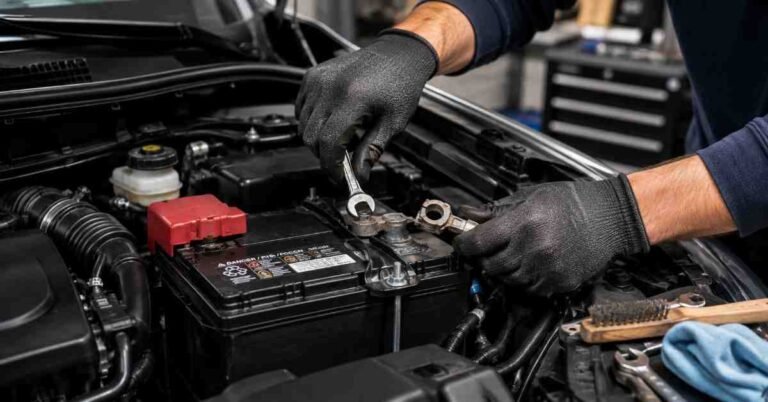
- Skipping basic maintenance. Reliability surveys routinely flag battery and electrical issues that trace back to neglected upkeep. Even knowing something as simple as how to remove a car battery safely can prevent corrosion damage that leads to starting problems and costly diagnostics down the road.
- Ignoring recalls. An open recall on a used car is a free repair you’re leaving on the table.
- Assuming luxury means dependable. Some luxury brands, particularly newer EV-focused ones, score below the industry average.
How to Verify a Car’s Reliability Before You Buy
- Check the model-year-specific score, not just the brand average, on Consumer Reports, J.D. Power, or iSeeCars.
- Pull a vehicle history report for any used car to check for accidents, title issues, and service records.
- Get a pre-purchase inspection from an independent mechanic, especially for a private-party sale.
- Search the NHTSA database for open recalls and owner complaints tied to the exact model and year.
- Ask for maintenance receipts. A well-documented service history is one of the best predictors of how a car has actually been treated.
Frequently Asked Questions
What car brands are the most reliable? Based on the latest Consumer Reports data, Toyota, Subaru, Lexus, Honda, and BMW currently top the brand rankings, with Asian automakers as a group scoring well above the industry average.
What are some of the most reliable cars? The Toyota Camry, Toyota Corolla, Honda Accord, Lexus IS, and Subaru Crosstrek all rank at or near the top of current reliability surveys.
What are the top 5 most reliable car brands? Toyota, Subaru, Lexus, Honda, and BMW currently hold the top five spots in Consumer Reports’ brand reliability rankings.
Are Japanese cars more reliable than American or European cars? On average, yes. Asian brands scored 56 out of 100 in Consumer Reports’ latest survey, compared with 50 for European brands and 41 for domestic U.S. brands. That said, individual American and European models, like the Buick lineup or BMW 2 Series, can outperform the average for their region.
Is Tesla reliable now? It’s improved significantly. Tesla jumped eight spots in Consumer Reports’ most recent brand rankings, and the Model Y and Model 3 are now rated at or above average, a notable turnaround from a few years ago.
Do hybrids break down more than gas cars? Generally, no. Hybrids from experienced manufacturers like Toyota, Honda, Hyundai, and Kia tend to match or beat their gas-only counterparts in reliability surveys, while plug-in hybrids and full EVs still report more issues on average.
What’s the most reliable brand for used cars? Toyota leads by a wide margin in longevity studies, with models like the Corolla, Camry, and Sequoia among the most likely vehicles to reach 250,000 miles.
The Bottom Line
There’s no single “most reliable car” that fits every driver, but the data points in a consistent direction: brands that keep their engineering conservative and their platforms shared tend to hold up best, hybrids currently outperform plug-in and fully electric models, and buying a car’s second or third model year beats buying its first. Whatever you choose, cross-check the specific model and year against real data before you sign anything, and you’ll stack the odds firmly in your favor.