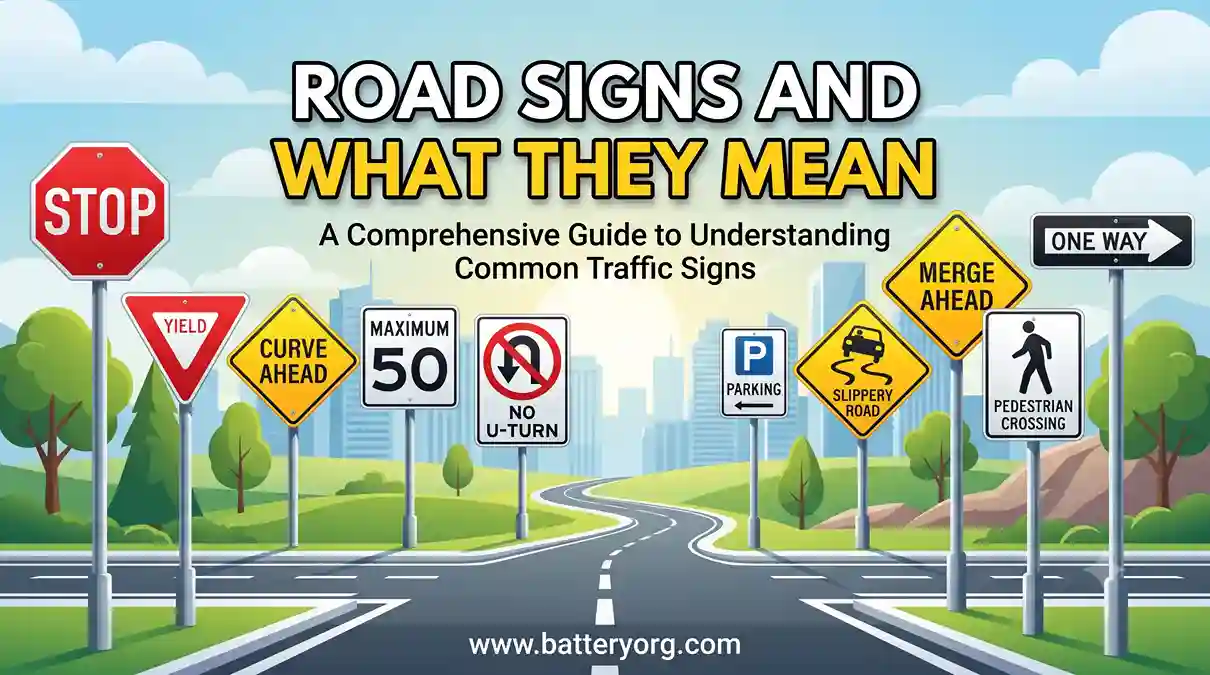
road signs and what they mean
Every time you get behind the wheel, you are having a silent conversation with hundreds of signs. They tell you when to stop, how fast to go, what hazards are ahead, and how to reach your destination. Most drivers absorb this information automatically, but a surprising number of road signs are routinely misunderstood — even by people who have been driving for decades.
Road signs in the United States are standardized through the Manual on Uniform Traffic Control Devices (MUTCD), published by the Federal Highway Administration. This ensures that a stop sign in California means exactly the same thing as a stop sign in Maine. But standardization only works when drivers actually understand what the signs are communicating. This guide covers all road signs and what they mean, organized by type, color, and shape, so you have one reliable reference to consult whenever a sign leaves you unsure.
How to Read Any Road Sign Before You Know What It Says
One of the most practical things to understand about American road signs is that you can often determine the general meaning of a sign from its color and shape alone — before you have even read the text or symbol on it. This is deliberate design, built to help drivers process information at highway speeds.
What Road Sign Colors Mean
Color is the first and fastest piece of information a sign communicates:
- Red — Stop, prohibition, or yield. Red always signals something you must not do or must stop doing. Stop signs, yield signs, Do Not Enter signs, and Wrong Way signs all use red.
- White and Black — Regulatory information. Speed limit signs, lane control signs, and most turn restrictions use a black-on-white format.
- Yellow — General warning. A yellow sign tells you something about road conditions ahead that requires attention or a speed adjustment.
- Orange — Construction and work zones. Orange signs are temporary and indicate active road work, lane shifts, or workers present.
- Green — Direction and guidance. Highway exit signs, distance markers, and permitted movement signs use green backgrounds.
- Blue — Motorist services. Gas, food, lodging, hospitals, rest areas, and evacuation routes are marked in blue.
- Brown — Recreation and culture. Brown signs guide you toward parks, historic sites, scenic byways, and points of cultural interest.
- Fluorescent Yellow-Green — High-visibility warning for school zones, pedestrian crossings, and bicycle paths.
What Road Sign Shapes Mean
Shape gives you a second layer of instant information:
- Octagon — Stop. Only stop signs use this shape. If you see an octagon, you stop.
- Inverted Triangle — Yield. Only yield signs use the downward-pointing triangle shape.
- Diamond — Warning. Diamond-shaped signs alert you to hazards, unusual road conditions, or upcoming changes in traffic patterns.
- Vertical Rectangle — Regulatory. Most speed limit signs and lane use restrictions use a vertical rectangle.
- Horizontal Rectangle — Guide information. Distance signs and destination signs typically use a horizontal rectangle.
- Pentagon (five-sided, point up) — School zone or school crossing.
- Pennant (side-pointing triangle) — No passing zone. These appear on the left side of the road only.
- Circle — Railroad advance warning or specific regulatory mandates.
Regulatory Signs and What They Mean
Regulatory signs communicate the law. Ignoring them is not a judgment call — it is a traffic violation. These signs tell you what you must do, what you must not do, and the specific rules that apply to the road you are currently driving on.
Stop and Yield Signs
The stop sign needs no explanation in isolation, but its application is where drivers make mistakes. A full stop means your vehicle must come to a complete halt — wheels completely stopped — before the stop line, crosswalk, or intersection edge. Rolling stops, sometimes called “California stops,” are illegal everywhere in the United States and are a leading cause of pedestrian injuries at intersections.
A yield sign means you must be prepared to slow to a stop and allow crossing or merging traffic to pass before you proceed. Unlike a stop sign, a yield does not require you to come to a complete halt if the way is already clear. However, if there is any doubt, you yield.
Speed Limit Signs
Speed limit signs display the maximum legal speed under normal conditions. That phrase — under normal conditions — is important. If it is raining, foggy, or you are driving through a school zone at dismissal time, the posted limit may still be too fast for conditions. In most states, driving too fast for conditions is a separate offense from speeding, even if you are technically below the posted limit.
Some roads also post a minimum speed limit, typically shown in blue. These exist on high-speed facilities like freeways where driving too slowly creates a hazard for other traffic.
Turn Restriction and Lane Use Signs
No Left Turn, No Right Turn, No U-Turn, and One Way signs are regulatory and carry full legal weight. A No U-Turn sign with a red circle and slash does not mean U-turns are discouraged — it means they are prohibited and can result in a fine.
Lane use signs, including those designating High Occupancy Vehicle (HOV) lanes or carpool lanes, often confuse drivers. An HOV 2+ sign means the lane is restricted to vehicles carrying two or more occupants during the posted hours. Driving solo in an HOV lane during restricted hours carries significant fines in most states. If you are driving an electric vehicle and planning a road trip, it is worth checking whether your specific EV qualifies for HOV access — this is one of several practical considerations covered in this guide to the most reliable cars in 2026.
Do Not Enter and Wrong Way Signs
These two signs often appear together at freeway off-ramps and divided highway entrances. A Do Not Enter sign (white horizontal bar on red background) means you must not proceed in that direction under any circumstances. Wrong Way signs (red background, white text) are placed further along the same road and confirm that you are traveling against traffic. Both require an immediate, safe stop and reversal of direction.
Warning Signs and What They Mean
Yellow diamond-shaped warning signs are the road’s way of preparing you for what is coming. They do not require a specific action beyond alerting you to adjust your speed and awareness. The wide variety of warning signs reflects the enormous range of conditions drivers encounter.
Curve and Road Condition Warning Signs
A curved arrow on a yellow diamond tells you the road ahead bends significantly. The sharper the depicted curve, the more severe the actual curve. Advisory speed plates often appear below these signs — a small yellow sign showing a speed like “25 mph” — which indicates the recommended safe speed through that specific curve. These advisory speeds are not legally enforced like speed limits, but they represent engineering assessments of what the curve can safely accommodate.
Other common road condition warnings include slippery when wet signs (a car with wavy lines beneath it), bump signs, dip signs, and divided highway begins or ends signs. The divided highway signs are particularly important because they signal a change in the road’s structure — either the addition of a median separating opposing traffic, or its absence.
Intersection and Merging Warning Signs
Signs warning of upcoming intersections, merging traffic, and lane reductions give you time to check mirrors, adjust speed, and prepare to share space with other vehicles. A merging traffic sign does not give the merging driver the right of way — it simply alerts the through driver that someone is entering the roadway ahead.
Crossbuck signs at railroad crossings are technically regulatory, but their distinctive white X-shape functions as a warning. When you see a crossbuck, you must look and listen in both directions before crossing. If a train is coming, you must wait regardless of whether a gate or flashing lights are present.
Pedestrian, School, and Animal Warning Signs
Pedestrian crossing signs and school crossing signs appear in fluorescent yellow-green to maximize visibility. A pedestrian in a crosswalk always has the right of way — warning signs in those areas remind drivers to be actively scanning for foot traffic, not just reacting to it.
Animal crossing signs — deer, elk, livestock, and even turtles in some regions — mark areas where wildlife regularly crosses the road. These signs reflect actual data on animal movement patterns and collision history. Dawn and dusk are the highest-risk periods for animal crossings, particularly deer.
Guide and Information Signs
Green, blue, and brown signs exist to help you navigate rather than regulate your behavior. They carry no legal obligation in themselves but are essential for getting where you are going.
Highway and Freeway Guide Signs
Interstate highway signs use a distinctive shield shape with the route number. Odd-numbered interstates run north to south; even-numbered interstates run east to west. Three-digit interstate numbers indicate auxiliary routes — loops, spurs, or bypasses around metropolitan areas. The first digit of a three-digit interstate tells you whether it is a loop (even first digit, like I-285) or a spur that does not reconnect to the main route (odd first digit, like I-190).
Advance exit signs on freeways typically appear one mile and one-half mile before the exit, giving you time to safely change lanes. Exit numbers in most states correspond to mile markers, so if you are at Exit 42 and need Exit 67, you know you have 25 miles remaining.
Service and Motorist Signs (Blue)
Blue signs with symbols for fuel, food, lodging, camping, and medical services appear on freeways and rural highways to direct drivers to services at upcoming exits. On rural interstates where services may be many miles apart, these signs can be practically important information for planning fuel stops — something especially relevant for electric vehicle drivers managing range between charging stations.
Recreation and Cultural Signs (Brown)
Brown signs guide travelers to national parks, state parks, historic landmarks, scenic overlooks, and other points of interest. They are informational rather than regulatory and follow the same general placement rules as other guide signs.
Construction and Work Zone Signs
Orange signs in a work zone are temporary but carry the full force of law. Speed limits posted in work zones are legally enforceable, and in most states, fines in active work zones are doubled — sometimes even when workers are not actively present.
Flagger signs warn you that a person is controlling traffic flow ahead. When a flagger’s paddle shows STOP, you stop — it carries the same authority as a stop sign. A flagger showing SLOW means you reduce speed and proceed with caution past the work area.
Lane closure signs, road closed signs, and detour signs require compliance. Taking your own route around a road closure rather than following a marked detour can be both illegal and dangerous if you are unaware of conditions ahead.
Road Signs Drivers Commonly Get Wrong
Several signs trip up even experienced drivers consistently enough to be worth addressing directly.
The Left Turn Yield on Green sign catches many people off guard. A standard green light does not automatically give left-turning vehicles priority. If this sign is posted, you must wait for a safe gap in oncoming traffic before completing the turn, even though the light is green.
The No Turn on Red sign is straightforward in wording but frequently ignored. In the United States, a right turn on red is generally permitted after a full stop unless a sign specifically prohibits it. When that sign is posted, the prohibition applies regardless of whether the intersection looks clear.
Keep Right Except to Pass is a regulatory sign on multi-lane highways that many drivers treat as optional advice. In states where it is posted, driving continuously in the left lane when not actively passing is a traffic violation — and a significant cause of highway congestion and road frustration.
Understanding all road signs is not just a matter of passing a driving test. It directly affects how safely and confidently you handle your vehicle on roads you have never driven before. When you are buying a used car or a new vehicle, knowing how to read every sign you will encounter is part of being a responsible owner — just as practical as knowing how to remove a car battery or handle basic maintenance tasks. And if you are currently in the market, a broader understanding of automotive responsibility starts with decisions covered in this guide on how to buy a car.
Road Signs and Safe Driving: The Bigger Picture
Road signs are only effective when drivers actively read and respond to them. Distracted driving has made sign comprehension a genuine public safety issue — a driver looking at a phone misses not just one sign but every sign in that stretch of road. The Federal Highway Administration estimates that driver inattention is a factor in a significant percentage of crashes that occur in work zones, school zones, and at marked intersections.
Reviewing sign meanings periodically — not just when preparing for a driving test — is a practical habit. Rules change, new signs are introduced, and the human brain becomes complacent with familiar routes. A driver who has been traveling the same commute for ten years may miss a newly posted speed reduction or a changed intersection configuration simply through routine.
For official sign standards and updates, the Federal Highway Administration maintains the MUTCD at mutcd.fhwa.dot.gov. You can also search road signs and what they mean on Google to find your specific state’s DMV handbook, which includes state-specific sign variations not covered by federal standards alone. More automotive guides and resources for drivers are also available at BatteryOrg.
Frequently Asked Questions
What are the three main types of road signs?
The three primary categories are regulatory signs, warning signs, and guide signs. Regulatory signs communicate laws and must be obeyed. Warning signs alert you to hazards or road condition changes ahead. Guide signs provide directional, distance, and service information to help you navigate. Construction signs form a fourth commonly recognized category, though they are technically a subset of temporary traffic control signs.
What does a yellow diamond sign mean?
A yellow diamond-shaped sign is a warning sign. It alerts you to a potential hazard, change in road conditions, or upcoming situation that requires attention. Common examples include curve ahead, pedestrian crossing, merge ahead, and slippery when wet signs. Yellow diamond signs do not require a specific action like stopping, but they do require you to reduce speed and increase awareness based on conditions.
What do the colors of road signs mean?
Each color carries a distinct meaning. Red indicates stop, prohibition, or yield. White and black indicate regulatory information like speed limits. Yellow indicates general warnings. Orange marks construction zones. Green provides directional guidance. Blue points to motorist services like fuel and food. Brown directs drivers to recreation areas and cultural sites. Fluorescent yellow-green highlights school zones and pedestrian areas.
Are all road signs the same in every US state?
Federal standards set by the MUTCD apply nationwide, which means the core sign vocabulary is consistent across all 50 states. However, individual states may have additional signs that reflect local laws, geography, or specific traffic conditions. California, for example, uses some sign designs and highway numbering conventions that differ slightly from other states. For state-specific variations, the most accurate resource is your state’s official DMV driver handbook.
What should I do if I see a road sign I do not recognize?
Slow down and proceed cautiously. Most unrecognized signs fall into warning or regulatory categories, so treating an unknown sign as a warning is the safest default response. Avoid stopping suddenly on a high-speed road, but do reduce your speed and increase your following distance. After the drive, look up the sign in your state’s driver handbook or the FHWA’s MUTCD resource online so you are prepared for the next encounter.
Conclusion
Road signs and what they mean form the foundation of every drive you take. The system of colors, shapes, and symbols used across American roads is thoughtfully designed to communicate information as quickly and clearly as possible — but it only works when drivers take the time to understand it thoroughly.
Whether you are a new driver preparing for a license exam, an experienced driver refreshing your knowledge, or someone who has just moved from another country and needs to learn a new sign system, the investment in understanding road signs pays for itself every time you drive. Regulatory signs tell you the law. Warning signs prepare you for what is ahead. Guide signs get you where you are going. Together, they represent a complete language of the road — one worth speaking fluently.