How Regenerative Braking Works
Regenerative braking works by running the electric motor backward as a generator. When you lift off the accelerator or touch the brake, the turning wheels spin the motor, and the motor converts that motion into electricity that flows back into the battery.
In a gas car, all of that slowing turns into heat in the brake pads and rotors. In an EV or hybrid, a share of it becomes range you get to use again.
How regenerative braking works inside the drivetrain
An electric motor is reversible. Feed it current and it turns the wheels; turn it with the wheels and it produces current. When the car’s software decides you want to slow down, the inverter changes how it controls the motor so the motor resists rotation instead of driving it.
That resistance is what you feel as deceleration. The electricity it generates passes back through the inverter and into the pack as charge. Hybrids use the same principle, which is a big part of why they do so well in stop-and-go traffic.
How much energy comes back
Less than all of it. The motor, the inverter and the battery each lose a little energy in every conversion, so slowing down and speeding up again never breaks even. How much you recover depends on the speed you are shedding, how gradually you slow, and the battery’s condition at that moment.
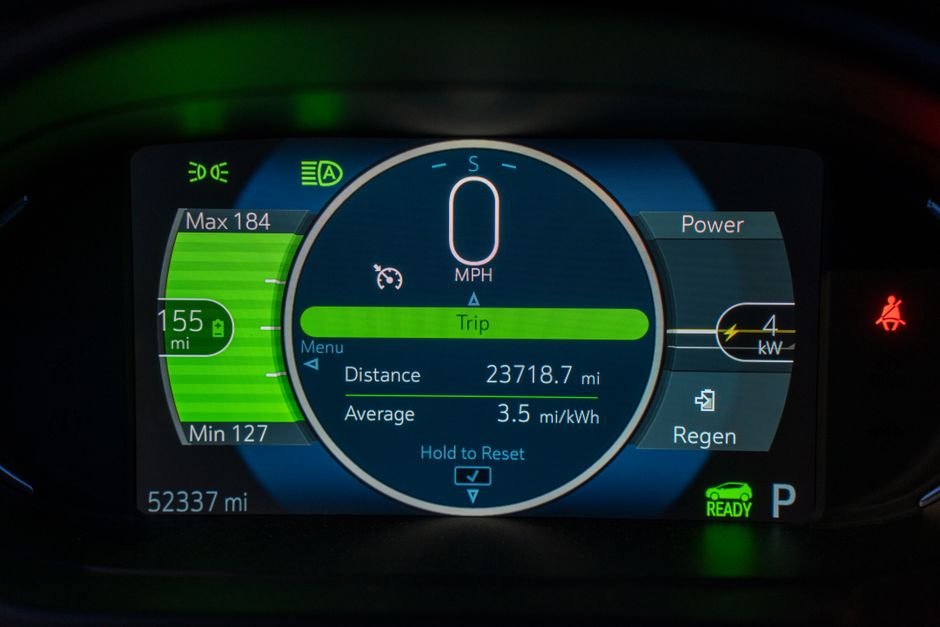
Be wary of any single recovery percentage quoted for EVs in general. It varies by vehicle, driving pattern and conditions. What holds up is the pattern: EVs often post better efficiency in city driving than at steady highway speed, which is the reverse of most gas cars. That is one reason the gap between real-world EV range and the EPA estimate depends so heavily on where you drive.
When regen gets weaker
- Full battery. A pack near 100% has little room to accept charge, so many cars reduce regen until some energy has been used. The car will coast more than usual right after a full charge.
- Cold battery. Lithium-ion cells accept charge slowly when cold, so regen is often limited on winter mornings until the pack warms up.
- Hard stops. The motor can only absorb so much power at once. In a sudden or emergency stop, the friction brakes do most of the work, and the car blends the two systems automatically.
What it means for your brakes
Because the motor handles much of the routine slowing, brake pads on an EV often last noticeably longer than on a comparable gas car. How much longer depends on the vehicle and how you drive, so don’t stretch inspections on that assumption.
The catch is that brakes used gently for years can corrode. Rotors can rust and caliper slides can stick, particularly where roads are wet or salted. On some EVs, the first brake repair is about corrosion rather than worn pads. When the car is inspected, ask for rotor and caliper condition as well as pad thickness; the basics of checking brake pad wear without removing the wheel still apply.
For a plain overview of the motor, inverter and battery that make this possible, fueleconomy.gov has a clear explainer on how electric vehicles work.
Regen doesn’t create free energy. It just wastes less of the energy you already paid for, and smooth driving that anticipates stops lets it do the most good.