What Causes Brake Fade, and How to Avoid It
Brake fade is what happens when your brakes get hot enough that the pads and rotors stop biting the way they should, and it usually shows up on a long downhill grade or after several hard stops in a row. The pedal goes soft, stopping distances stretch out, and it can happen faster than most drivers expect.
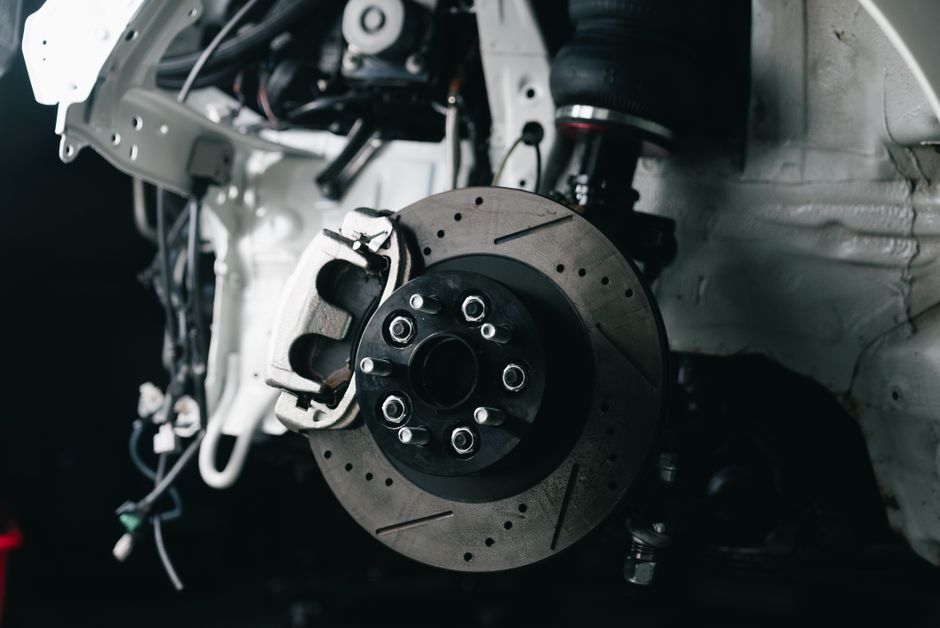
The heat is the whole story. Every time you brake, kinetic energy turns into heat at the pad-rotor contact. On a flat road that heat has time to dissipate between stops. On a long grade, or towing a trailer down a mountain pass, heat builds faster than it can escape. Past a certain temperature, brake fluid can start to boil and pad material can glaze over, and both cut your stopping power right when you need it most.
The two kinds of brake fade
Pad fade happens when the friction material overheats and glazes, losing grip on the rotor. It usually recovers once things cool down, though a badly glazed pad may need light sanding or replacement to fully restore. Fluid fade is more serious: brake fluid absorbs moisture over time, and that moisture lowers its boiling point. Push it too far and the fluid boils, forming gas bubbles that compress instead of transferring pressure — which is why the pedal feels spongy or sinks toward the floor.
Old fluid fades sooner than fresh fluid. That’s the reason a fluid flush every two to three years matters even when nothing feels wrong yet, and it’s worth confirming the last time a pre-trip inspection included it.
What actually helps on a long descent
Downshift before the grade, not during it. Using engine braking to hold your speed means the brakes only handle small corrections instead of doing all the work continuously. On an automatic, a lower gear or manual mode does the same job. Riding the brakes lightly the whole way down is the worst habit of all, since it keeps heat building with no chance to shed it.
If the pedal starts feeling soft or the car pulls to one side under braking, pull over somewhere safe and let everything cool for fifteen or twenty minutes before continuing. Watch for signs the pads are already thin going into a long trip:
- A high-pitched squeal present even under light braking
- Visible grooves or scoring on the rotor surface
- Pedal travel noticeably longer than usual
Catching worn pads early is easier than diagnosing fade on a mountain road — checking pad thickness without pulling the wheel takes a few minutes and tells you whether you’re heading into a long grade with margin or without it.
Brake fade is rarely one bad component; it’s heat outpacing the system’s ability to shed it. Pad and rotor design exists largely to manage exactly this, which is part of why engineering bodies like SAE International spend so much effort on brake cooling and fade testing. For daily driving, the fix is mostly habit: downshift early, don’t ride the pedal, and keep fluid and pads on a normal service schedule.
Vehicle weight matters more than most drivers assume, too. A loaded car, or one towing anything at all, generates far more heat per stop than the same car driving empty, since the brakes absorb more kinetic energy each time they’re applied. Heading into a long descent with a full load or a trailer, plan for more frequent cooling breaks, and check that trailer brakes, if equipped, are doing their fair share rather than leaving your tow vehicle to handle it alone.