How Battery Management Systems Protect a Pack
Every lithium-ion pack bigger than a phone battery has a battery management system watching it, and what does a battery management system do is answer a narrower question than people expect: it doesn’t make the battery more powerful, it keeps dozens or hundreds of individual cells from drifting out of the narrow voltage and temperature range they need to stay safe and last as long as they’re rated to.
A pack is never really one battery. It’s a stack of individual cells wired together, and cells are never perfectly identical — small differences in manufacturing mean one cell in a hundred might charge slightly faster or run a few degrees warmer than its neighbors. Left alone, those small differences compound over hundreds of cycles until one cell is doing more work than the rest, aging faster and eventually limiting what the whole pack can deliver.
What a Battery Management System Does
Monitoring comes first: sensors on each cell or small group of cells track voltage and temperature continuously, giving the system a live picture of the pack’s health. Balancing comes second — the BMS routes small amounts of current to or around individual cells so they stay at roughly the same charge level as each other, rather than letting the weakest cell drag down the group. Protection is the third and most important job: if a cell’s voltage or temperature moves outside its safe window, the BMS can throttle charging or discharging, or disconnect the pack entirely, well before the condition becomes dangerous.
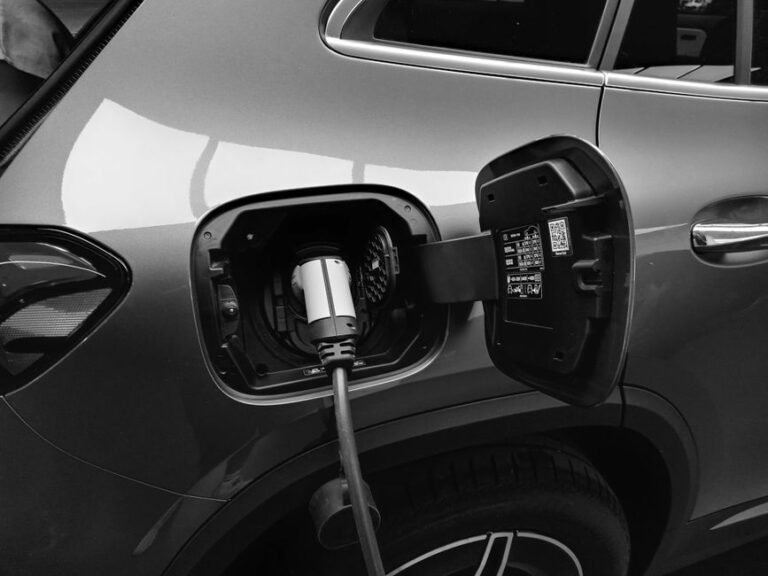
That protection layer is also what talks to the charger. When you plug in an EV or a power tool battery, the charger isn’t deciding on its own how fast to push current — it’s negotiating with the BMS, which reports how much the pack can safely accept given its current temperature and state of charge. That’s part of why charging slows down as a pack approaches full, and why charging is slower in very cold weather: the BMS is limiting current to protect the cells, not because the charger got weaker.
| Function | What it prevents |
|---|---|
| Cell voltage monitoring | Individual cells overcharging or over-discharging |
| Thermal monitoring | Operating outside a safe temperature window |
| Cell balancing | Uneven aging that shortens usable pack life |
| Current limiting / cutoff | Runaway conditions during a fault |
None of this is something an owner tunes or overrides, and that’s by design. Reference the Department of Energy’s overview of EV batteries if you want the underlying chemistry, but the practical takeaway is simpler: the BMS is the reason a modern lithium-ion pack degrades gradually and predictably rather than failing without warning, and it’s also why a pack showing erratic behavior — sudden voltage drops, a fault light, a charger that won’t complete a cycle — belongs with a qualified technician rather than a home fix. For further reading on how packs age, see how battery degradation is measured and how it compares to lithium-ion versus solid-state batteries.