How Fast-Charging Standards Differ Across Devices
A “fast charger” on a phone box and a “fast charger” on an EV badge aren’t describing the same thing, and a fast-charging standards comparison across device categories shows just how far apart they really are. The label means whatever’s fast relative to that device’s own baseline, not some universal speed you can assume carries over.
What counts as fast, by device
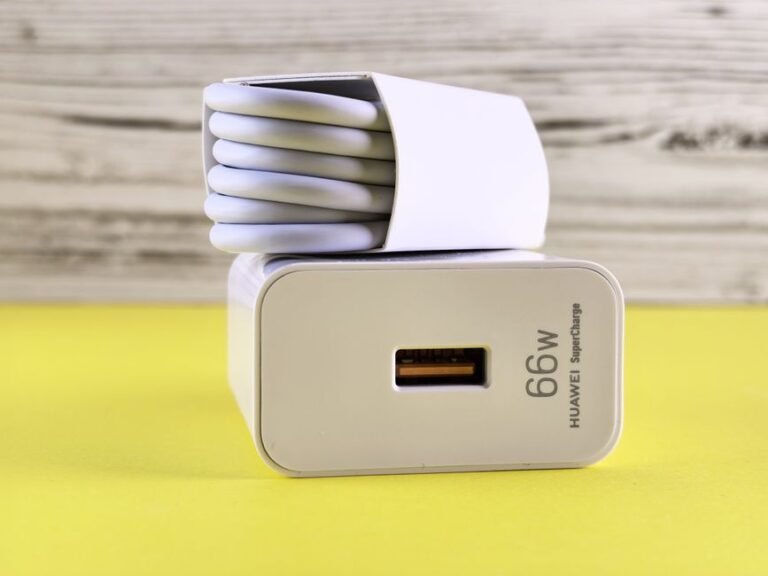
Phones and tablets mostly run on USB Power Delivery (USB-PD) or a manufacturer’s proprietary variant of it, typically delivering somewhere between 18W and 65W depending on the phone and the charger paired with it. Laptops use the same USB-PD standard but at higher wattages, often in the 65W-140W range, because they’re charging a bigger pack and running the machine at the same time. EVs are a different scale entirely: Level 2 home charging runs at roughly 7-11 kW, while public DC fast charging can exceed 150 kW at the busiest stations — several orders of magnitude past a phone charger, and not something any home outlet is wired to deliver.
| Device | Typical fast-charge power | Common standard |
|---|---|---|
| Phone | 18-65W | USB-PD or proprietary |
| Laptop | 65-140W | USB-PD |
| E-bike | 200-500W | Proprietary charger |
| EV (home) | 7-11 kW | Level 2 AC |
| EV (public) | 50-350 kW | DC fast charging |
Why the standards don’t fully overlap
USB-PD is the closest thing to a universal standard, and it’s why a single USB-C charger can now reasonably fast-charge a phone, a tablet, and some laptops from the same brick. It tops out well below what an EV or even a large power tool battery needs, though, which is why those categories run their own dedicated charging hardware rather than a USB-C brick with a thicker cable. The USB Implementers Forum documents the current specification and its power tiers on its USB charger and power delivery page. E-bikes and power tools mostly skip USB-PD entirely and use a proprietary brick matched to that one battery pack, which is why a charger from one tool brand almost never works on another brand’s pack even when the connector looks similar.
EV fast charging adds a negotiation step the others don’t need in the same way: the car and the charger communicate to agree on a safe current and voltage before power ramps up, and that ramp tapers as the pack fills so the last portion of a charge takes disproportionately longer than the first. That’s also why a public fast-charging session quoted at “150 kW” rarely holds that number for the whole session — it’s a peak, not a constant.
Faster isn’t free on any device. Higher charge rates generate more heat, and heat drives long-term capacity loss whether the pack is the size of a phone or the size of a car — the same trade-off shows up in phone and EV batteries alike, and it’s behind one of the more common mistakes people make charging power tool batteries: assuming a higher-wattage charger is always the better choice. Match the charger to the device’s rated limit printed in its manual, not the highest number on the box it came in, and don’t assume a bigger brick charges a small device any faster once the device’s own limit caps the rate.