Common Mistakes People Make Disposing of Old Batteries
Most battery disposal mistakes come down to one habit: treating every dead battery like ordinary trash. Some chemistries are genuinely hazardous in a landfill, and even the harmless-seeming ones are worth recovering rather than burying in the ground for good.
Mistake: tossing lithium batteries in the household trash
A damaged or improperly stored lithium cell can short internally and ignite — it’s a leading cause of fires at waste sorting facilities, where a punctured battery gets crushed alongside cardboard and plastic. Any lithium battery, from a phone to a power tool pack, belongs at a battery drop-off point or a retailer take-back bin, not the curbside bin. Tape the terminals first if the cell is swollen, punctured, or otherwise damaged, and see the guide on handling a swollen or damaged battery before moving it anywhere in the house.
Mistake: mixing battery chemistries in one container
Alkaline, lithium, and rechargeable nickel-based batteries don’t all fail the same way, and tossing them loose in one bag or drawer raises the odds that a punctured terminal touches another battery’s terminal and starts a short. This is exactly how junk-drawer fires start — not from one bad battery, but from several touching each other at the wrong points. Bag or tape terminals individually, and keep chemistries separated if you’re storing a batch for a drop-off run rather than trusting they’ll sort themselves out.
Mistake: assuming “rechargeable” means “recyclable everywhere”
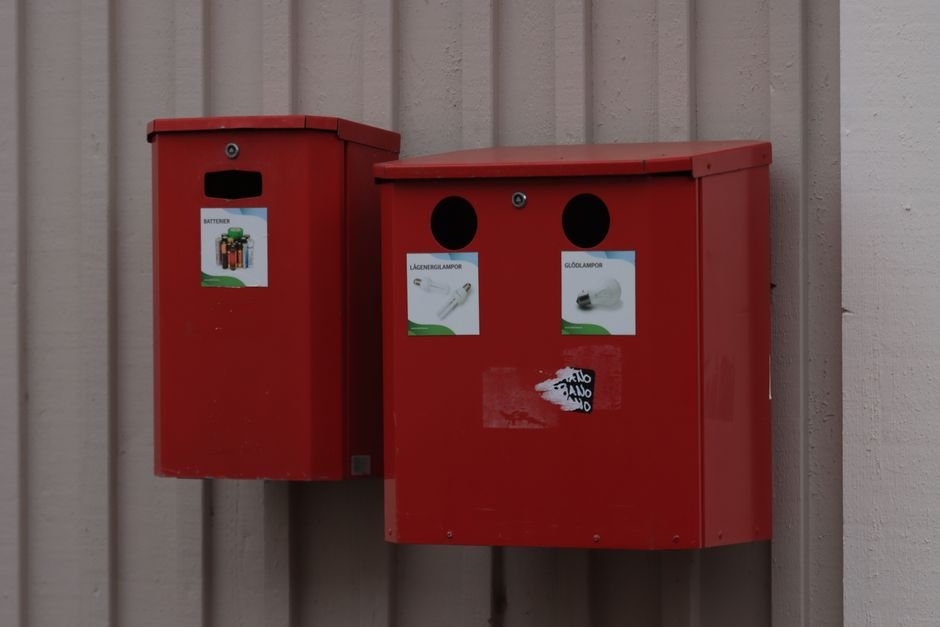
Rechargeable batteries contain metals worth recovering, but not every recycling program takes every battery type. Many curbside programs still exclude batteries entirely, which is exactly why dedicated take-back points exist at hardware stores, electronics retailers, and municipal hazardous-waste sites instead. Check for a local drop-off before assuming your regular recycling bin will handle it — a look at how the recycling process works explains why sorting matters this much and why a mixed load can get rejected entirely.
Mistake: waiting until a battery is already leaking
Alkaline batteries can leak a corrosive paste once they’ve been dead for a while, and a leaking cell is harder to handle safely than a fresh one — it can also damage whatever it’s sitting in. A battery that has been sitting dead in a drawer for months is a good candidate for the next drop-off trip rather than another year of storage waiting for a “someday” errand. The EPA’s guidance on used household battery disposal covers which chemistries need extra care and which ones are relatively low-risk to store in the meantime.
Mistake: storing a whole drawer of dead batteries “for later”
A junk drawer full of loose batteries in every chemistry, at every state of charge, is a bigger hazard than any single dead battery on its own. The longer they sit together, the more time terminals have to shift, touch, and corrode. If a drop-off point isn’t nearby, most hardware and electronics retailers keep a small collection box near the entrance specifically so this doesn’t need to become a special errand — it can ride along with a normal shopping trip.
None of this is complicated, but it takes a real trip to a drop-off point instead of a walk to the curb — which is the part most people skip, week after week, until the drawer is full and someone finally deals with it all at once.