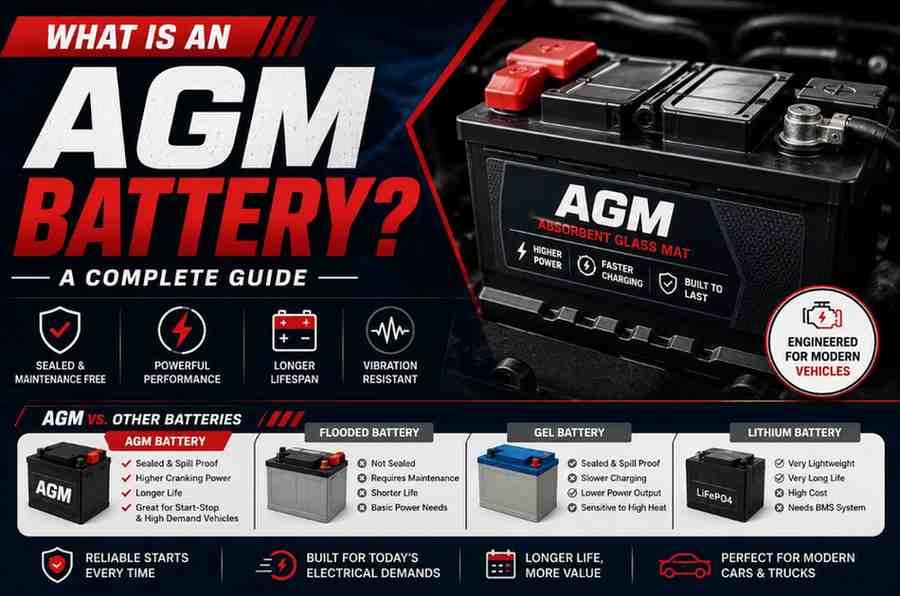
What Is an AGM Battery? A Complete Guide for Car Owners
If your car battery just died and the shop handed you a quote for something called an “AGM battery,” you’re probably wondering what that even means and why it costs more than the battery you had before.
Here’s the short answer: an AGM battery is a sealed lead-acid battery that stores its acid inside a fiberglass mat instead of letting it slosh around freely. That single design change is behind nearly everything that makes AGM batteries different from the standard battery under most hoods for the last century.
This guide covers what AGM batteries are made of, how they work, the different types on the market, how they stack up against flooded, gel, and lithium batteries, and how to know if your vehicle actually needs one. By the end, you’ll be able to walk into any auto parts store and know exactly what you’re buying.
What Does AGM Mean in a Battery?
AGM stands for Absorbent Glass Mat. It refers to the thin sheet of woven fiberglass sandwiched between the positive and negative lead plates inside the battery.
In a traditional battery, sulfuric acid electrolyte moves around freely inside the case. In an AGM battery, that same acid is soaked up and held inside the glass mat, similar to how a sponge holds water. The mat stays in close contact with the lead plates at all times, which is what gives AGM batteries their quick power delivery and resistance to vibration.
AGM batteries fall under a broader category called VRLA batteries, short for Valve-Regulated Lead-Acid. Instead of the removable caps you’d find on an old-school battery, AGM batteries use a one-way pressure valve that releases gas only if internal pressure builds up too high. Under normal use, the battery stays fully sealed.
What Is an AGM Battery Made Of?
An AGM battery uses the same core chemistry as a conventional car battery: lead plates and sulfuric acid electrolyte. What changes is how those materials are arranged.
Lead plates. AGM batteries typically use thinner, more tightly packed lead plates than flooded batteries. Because the glass mat holds everything in place, manufacturers can fit more plate surface area into the same case size, which boosts power output.
Glass mat separator. This is the defining feature. The absorbent glass mat sits between each pair of plates, soaking up the electrolyte and keeping it evenly distributed across the plate surface.
Sulfuric acid electrolyte. AGM batteries use less liquid electrolyte overall than flooded batteries, since the mat only needs enough acid to stay saturated, not enough to fill the case.
Sealed case with a pressure valve. The outer case is built to handle higher internal pressure than a flooded battery case, with a valve that vents excess gas only when necessary.
Lead-calcium or lead-tin grid alloys. These alloys reduce water loss and self-discharge, which is part of why AGM batteries can sit in storage far longer than flooded batteries before losing a meaningful charge.
How Do AGM Batteries Work?
When you turn the key or press the start button, the lead plates react chemically with the sulfuric acid electrolyte, releasing electrons that flow out as electrical current. That part is identical to any lead-acid battery.
The difference is in how quickly and efficiently that reaction happens. Because the electrolyte is held tightly against the plates by the glass mat, there’s more consistent contact between the acid and the lead. That lowers internal resistance, which means the battery can push out a strong burst of current for engine starting and also accept current faster when it’s time to recharge.
The sealed, valve-regulated design also means the gases produced during charging largely recombine inside the battery instead of escaping, so you’re not topping off water levels the way older car battery owners used to.
Types of AGM Batteries
Not every AGM battery is built for the same job. Manufacturers generally produce three types.
Starting (SLI) AGM Batteries
SLI stands for Starting, Lighting, Ignition. These are built to deliver a fast, powerful burst of current to crank the engine, then let the alternator take over. Most factory-installed AGM batteries in passenger cars and trucks fall into this category.
Deep-Cycle AGM Batteries
Deep-cycle AGM batteries are designed to be drained down and recharged repeatedly without losing capacity. They’re common in RVs, boats, solar power setups, and off-grid systems where a battery needs to run lights, pumps, or electronics for hours at a time.
Dual-Purpose AGM Batteries
Dual-purpose AGM batteries try to split the difference, offering enough cranking power to start an engine while still handling moderate deep-cycle use. You’ll see these in boats, side-by-sides, and overland vehicles that need to start an engine and run accessories.
Most AGM batteries use flat lead plates, sometimes called flat-plate construction. A few premium brands, most notably Optima, wind their plates into a tight spiral instead, which is marketed as extra vibration resistance and a more compact footprint. Functionally, both designs are still absorbent glass mat batteries.
AGM vs. Other Battery Types
Choosing a replacement battery usually comes down to comparing AGM against three alternatives: flooded (standard) batteries, gel batteries, and lithium batteries.
| Feature | Flooded (Standard) | AGM | Gel | Lithium (LiFePO4) |
|---|---|---|---|---|
| Maintenance | May need water top-offs | Maintenance-free | Maintenance-free | Maintenance-free |
| Spill risk | Can leak if tipped | Spill-proof | Spill-proof | No liquid electrolyte |
| Vibration resistance | Lowest | High | Moderate | High |
| Depth of discharge | Around 50% | Up to 80% | Moderate | Up to 100% |
| Charge speed | Slowest | Fast | Slow | Fastest |
| Typical upfront cost | Lowest | Moderate to high | Moderate to high | Highest |
| Cold weather performance | Fair | Good | Weaker | Requires internal heating in extreme cold |
AGM vs. Standard (Flooded) Batteries
A standard, or flooded, battery is what most cars used for decades: liquid electrolyte, removable caps, and a need for occasional maintenance. AGM batteries cost more upfront but require none of that upkeep, self-discharge much more slowly in storage, and hold up better against vibration and repeated partial discharges. The tradeoff is price.
AGM vs. Enhanced Flooded Batteries (EFB)
Some vehicles with basic start-stop systems use an Enhanced Flooded Battery instead of AGM. EFBs are a step up from standard flooded batteries in cycling ability, but they don’t match AGM’s depth of discharge or vibration resistance. If your car came with an EFB, check your owner’s manual before swapping in an AGM, since some start-stop systems are calibrated specifically for EFB charging behavior.
AGM vs. Gel Batteries
Gel batteries use a thickened, gel-like electrolyte instead of a liquid-soaked mat. They share AGM’s spill-proof, maintenance-free design, but gel batteries generally charge more slowly and lose capacity faster in cold weather. They’re less common in daily-driver vehicles and more often used in mobility scooters, wheelchairs, and some marine applications.
AGM vs. Lithium Batteries
Lithium batteries, usually lithium iron phosphate (LiFePO4), outperform AGM on weight, usable capacity, and charge speed, and they can be discharged much deeper without damage. They also cost considerably more. For most daily-driver cars and trucks, AGM remains the practical choice; lithium tends to make more sense for RVs, marine setups, and off-grid systems where weight and cycle life matter more than sticker price.
Advantages of AGM Batteries
- Maintenance-free. No water top-offs, no checking cell levels.
- Spill-proof design. The mat holds the electrolyte in place even if the case cracks.
- Mountable in almost any position. Unlike flooded batteries, which need to stay upright, AGM batteries can be installed on their side (just not upside-down).
- Better vibration resistance. Useful for off-road driving, motorcycles, and powersports.
- Faster charging. Lower internal resistance lets AGM batteries accept current more quickly than flooded batteries.
- Low self-discharge. AGM batteries hold their charge in storage far longer than flooded batteries, which makes them a solid choice for seasonal vehicles.
- Deeper discharge tolerance. AGM batteries can be drained further before recharging without the same risk of permanent damage that flooded batteries face.
Disadvantages of AGM Batteries
The main disadvantage of an AGM battery is cost. AGM batteries typically run anywhere from 30% to well over double the price of a comparable flooded battery, depending on brand and group size.
Beyond price, AGM batteries have a few other limitations worth knowing:
- Sensitive to overcharging. Too much voltage can permanently damage an AGM battery faster than it would a flooded one.
- Requires a compatible charger. Standard chargers without an AGM setting can overcharge the battery and shorten its life.
- Not a guaranteed lifespan upgrade. AGM batteries used to last roughly twice as long as flooded batteries, but modern flooded and enhanced flooded batteries have closed some of that gap. Actual lifespan depends heavily on the application and how the battery is used.
- Limited repairability. Because the cells are sealed, there’s no way to add water or service individual cells the way you could with an older flooded battery.
Do You Need an AGM Battery for Your Car?
Not every vehicle needs an AGM battery, but a growing number of them require one. Here’s how to tell.
Signs Your Car Needs an AGM Battery
- It has start-stop technology. Vehicles that shut the engine off at red lights and restart it when you take your foot off the brake put far more cranking cycles on a battery than a conventional engine does. A regular flooded battery can wear out in a matter of days under that kind of demand, which is why most start-stop vehicles ship with AGM from the factory.
- It’s loaded with electronics. Backup cameras, lane-keep assist, adaptive cruise control, heated seats, and infotainment systems all draw power even when the engine is off. An AGM battery handles that steady drain better than a standard battery.
- The factory battery is already AGM. If your vehicle came with an AGM battery, replacing it with a flooded battery can cause charging system issues, since many modern vehicles calibrate their charging profile around AGM chemistry.
- You drive in extreme conditions. Frequent off-roading, towing, or extended periods of vehicle storage all favor AGM’s vibration resistance and low self-discharge rate.
How to Confirm What Your Vehicle Needs
The most reliable way to know is to check your owner’s manual or look at the label on your current battery. Many auto parts retailers can also look up the correct battery type by your vehicle identification number. Don’t assume the battery currently installed is correct, since a previous owner or a rushed repair shop may have installed the wrong type.
Automakers that have widely adopted AGM batteries across much of their lineup include Ford, Chevrolet, Nissan, Toyota, Hyundai, Kia, and Jeep, particularly on trims with start-stop technology or advanced driver-assistance systems. This applies across sedans, trucks, and SUVs alike, so if you’re shopping for a new vehicle and comparing options like a fuel-efficient sedan against a more reliable SUV, it’s worth checking which battery type comes standard, since it affects your future replacement costs.
How to Charge an AGM Battery
AGM batteries need a charger designed for, or at least compatible with, AGM chemistry. Most modern smart chargers include an AGM setting; older chargers built only for flooded batteries may not.
A few practical guidelines:
- Match the charger to the battery. Look for a charger explicitly labeled for AGM, or one with a selectable AGM mode. A 12-volt AGM battery generally charges best in the 13.8- to 14.4-volt range, though you should always follow the charger and battery manufacturer’s specifications.
- Avoid gel or spiral-cell settings. These profiles charge differently than AGM chemistry requires and can lead to undercharging or damage.
- Keep charging current reasonable. Charging too aggressively can overheat the battery. Slower, controlled charging protects long-term capacity.
- Watch the temperature. If the battery casing feels hot to the touch during charging, stop and let it cool before continuing.
- Don’t leave a depleted AGM battery sitting. Recharge it as soon as practical after a deep discharge to avoid sulfation, a buildup of lead sulfate crystals that permanently reduces capacity.
AGM Battery Lifespan and Cost
A well-maintained AGM battery in a passenger vehicle typically lasts three to six years, similar to a quality flooded battery, though AGM batteries used in demanding start-stop applications may wear out faster simply because they’re cranking the engine so much more often.
On price, expect to pay more than you would for a standard flooded battery. As of 2026, flooded automotive batteries generally run $100 to $200, while AGM batteries for passenger cars and trucks typically fall between $150 and $300, with premium and larger group sizes reaching $400 or more. The exact price depends on your vehicle’s required group size, cold cranking amp rating, brand, and where you buy it.
While the sticker price is higher, factor in that AGM batteries typically require zero maintenance costs and hold up better to the electrical demands of modern vehicles, which can offset some of that upfront gap over the life of the battery.
Common Mistakes to Avoid With AGM Batteries
- Installing the wrong battery type. Swapping a flooded battery in for a factory AGM (or vice versa) can cause charging system warnings or shortened battery life.
- Using a charger without an AGM setting. This is one of the fastest ways to shorten an AGM battery’s lifespan.
- Ignoring a slow crank. A sluggish start is often an early warning sign, not something to wait out.
- Letting the battery sit discharged. Even a spill-proof AGM battery can suffer permanent capacity loss from sulfation if it’s left in a low-charge state for too long.
- Assuming AGM batteries never fail from vibration. They’re more resistant than flooded batteries, but extreme, sustained vibration without proper mounting can still shorten their life.
How to Dispose of an Old AGM Battery
AGM batteries are lead-acid batteries, which means they’re classified as hazardous waste and should never go in the regular trash. The good news is that lead-acid batteries, AGM included, are recycled at a rate of nearly 98% in the United States, making them the most recycled consumer product in the country, according to Battery Council International.
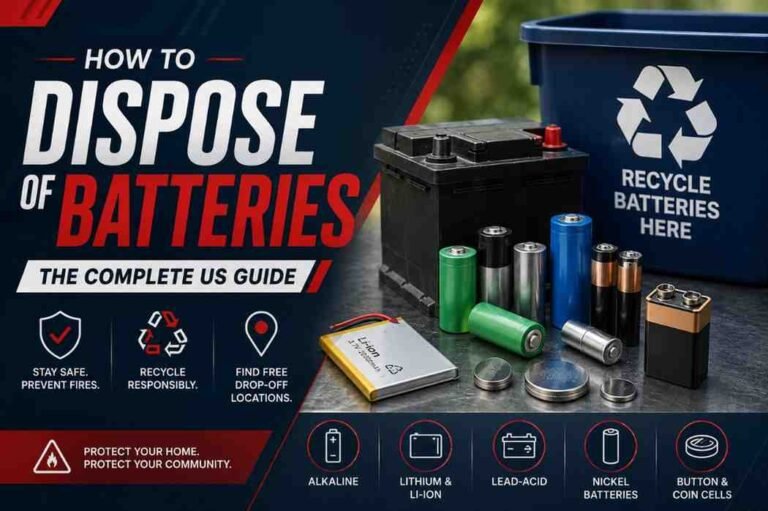
Most auto parts retailers will accept your old AGM battery for recycling when you buy a replacement, and many charge a small deposit, called a core charge, that gets refunded when you bring the old battery back. If you want the full breakdown of where to take different battery types and how the recycling process works, our guide on how to dispose of batteries walks through it step by step.
Frequently Asked Questions
What does AGM stand for in a battery? AGM stands for Absorbent Glass Mat, referring to the fiberglass separator that holds the electrolyte between the battery’s lead plates.
What is the main disadvantage of an AGM battery? Cost is the primary drawback. AGM batteries typically cost more than standard flooded batteries, and they also require an AGM-compatible charger to avoid overcharging damage.
What is an AGM battery for a car used for? In vehicles, AGM batteries handle engine starting and power the growing list of onboard electronics, from infotainment to driver-assistance systems, and they’re especially important in vehicles with start-stop technology.
Can I replace a flooded battery with an AGM battery? Sometimes, but not always. Some vehicles, particularly certain start-stop models built around Enhanced Flooded Battery charging, aren’t compatible with a straight AGM swap. Check your owner’s manual or a battery lookup tool before switching.
Do AGM batteries need a special charger? Yes. AGM batteries perform best with a charger that has a dedicated AGM setting. A standard flooded-battery charger can overcharge an AGM battery and shorten its lifespan.
How long do AGM batteries last? Most AGM batteries in passenger vehicles last three to six years, depending on climate, driving habits, and how much cranking demand the vehicle places on the battery.
What is an AGM battery made of? An AGM battery is built from lead plates, sulfuric acid electrolyte absorbed into a fiberglass mat, and a sealed case with a pressure-relief valve.
Can AGM batteries be mounted in any position? AGM batteries can be mounted in most orientations, including on their side, because the electrolyte is held in the glass mat rather than free-flowing. The one exception is upside-down, which most manufacturers advise against.
Final Thoughts
An AGM battery comes down to one core idea: trapping the electrolyte in a glass mat instead of letting it move freely. That change is what gives AGM batteries their spill-proof design, faster charging, better vibration resistance, and ability to handle the electrical demands of modern vehicles.
Whether an AGM battery is worth the extra cost depends on your vehicle. If your car came with one from the factory, or if it has start-stop technology and a long list of onboard electronics, an AGM battery isn’t just a nice upgrade, it’s usually the right tool for the job.