Public EV Charging Etiquette: The Mistakes That Start Arguments
Most friction at a public charger comes from one habit: leaving a car in the bay after it has finished charging. Fix that and you have handled the biggest part of public EV charging etiquette; the rest is about sharing a limited resource when other drivers are waiting.
Chargers are scarcer than gas pumps, and a single session can take 20 minutes or several hours. That turns small lapses into real delays for the next driver. These are the mistakes that cause most of the trouble.
Staying parked after the session ends
Once your car stops drawing power, the bay is effectively free, except it isn’t, because you are in it. Set a phone alert or use the charging network’s app, which usually sends a notification when a session completes.
Many networks now charge idle fees for every minute a car stays plugged in past the end of a session. The exact rates vary by network and location, so check the app before you walk away.
Fast-charging to 100% while others wait
A DC fast charger delivers its highest power when the battery is low. As the pack fills, the car deliberately slows the rate to protect the cells, and the last stretch toward full can take nearly as long as everything before it. We cover why in our piece on fast charging and battery lifespan.
If there is a queue, unplug around 80% and move on unless you need the extra range to reach the next stop. That is also why most public charging etiquette guides treat fast chargers as a top-up tool, not a place to fill up overnight.
Using a fast charger for a tiny top-up at a busy site
Pulling in with 70% charge to grab a few percent is fine at an empty station. At a crowded one on a holiday weekend, it holds up someone arriving with single digits. Read the room.
Public EV charging etiquette for bays and cables
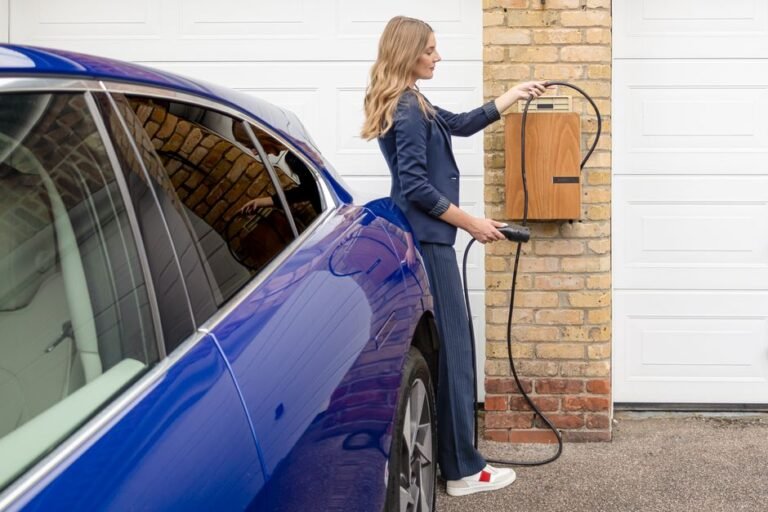
Parking a gas car in a charging spot is the obvious offense, but EV drivers do their own version. Common ones include:
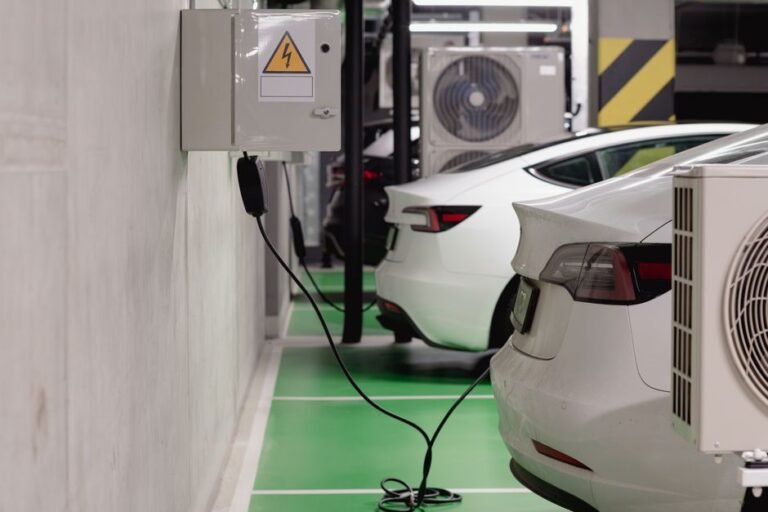
- Parking across two bays so one plug can’t reach the next car.
- Leaving a cable stretched across the walkway or lying in a puddle.
- Occupying a charger with the wrong connector for your car when a compatible one is free nearby.
Connector confusion is getting more common as networks mix plug types. If you are unsure which cable your car takes, our guide to NACS vs CCS compatibility explains what adapters do and don’t allow.
Unplugging someone else’s car, or leaving a broken charger unreported
Don’t unplug another driver’s car unless the site rules or the owner clearly say it’s allowed. Some owners leave a note or phone number for exactly this; others don’t, and pulling their cable can end a session they were counting on.
If a charger is broken, report it through the network’s app or the number on the unit, and flag it in whatever map you use. The Department of Energy’s Alternative Fuels Data Center station locator is one place to check which sites are listed and what connectors they offer before you commit to a stop.
None of this is written into law in most places, and the standards shift as charging gets busier. The next driver is usually in the same spot you were ten minutes ago, low on charge and watching the clock, so leave the bay the way you’d want to find it.