Solar Panel Degradation Rate: What 25 Years of Wear Looks Like
Your panels will produce less in year 20 than in year one, and that is expected. The solar panel degradation rate describes how fast that output declines, and for most quality panels it is gradual: usually well under one percent a year, though the exact figure depends on the panel and the climate.
A 25-year performance warranty doesn’t promise the panels won’t decline. It promises they won’t decline faster than a stated amount.
What a solar panel degradation rate means for your warranty
Performance warranties are typically written as a guaranteed share of original output at the end of the term, commonly somewhere around 80 to 90 percent after 25 years, varying by manufacturer and product line. Many also include a larger allowed drop in the first year, when panels go through a brief settling period, followed by a smaller annual limit.
Put simply, a panel guaranteed at 85 percent after 25 years could lose up to 15 percent of its output over that period and still be within warranty. Many panels do better than the warranty floor, but plan around the guarantee, not the best case.
Check whether the warranty is held by the panel manufacturer or the installer, and what happens if either goes out of business. A long warranty from a company that no longer exists is worth very little. The product warranty, which covers defects in materials, is separate and often shorter than the performance warranty.
Heat speeds up degradation, so panels in very hot climates tend to lose output faster than the same panels in mild ones. Poor ventilation behind the panels, physical damage from hail or foot traffic, and manufacturing defects can also accelerate it. Lower-cost panels with weak quality control are more likely to sit at the top end of the range.
Degradation also changes the payback math. A savings projection that assumes year-one production every year for 25 years overstates the benefit. A fair estimate builds in a yearly decline, along with any planned inverter replacement. We go through the rest of that calculation in how home solar panels pay for themselves.
Spotting a problem early
Gradual loss is hard to see from one month to the next because weather swings production far more than aging does. Compare the same month across several years instead, using your inverter’s monitoring app. A sudden drop is more likely a fault, such as a failed panel, a wiring issue or an inverter problem, than normal wear.
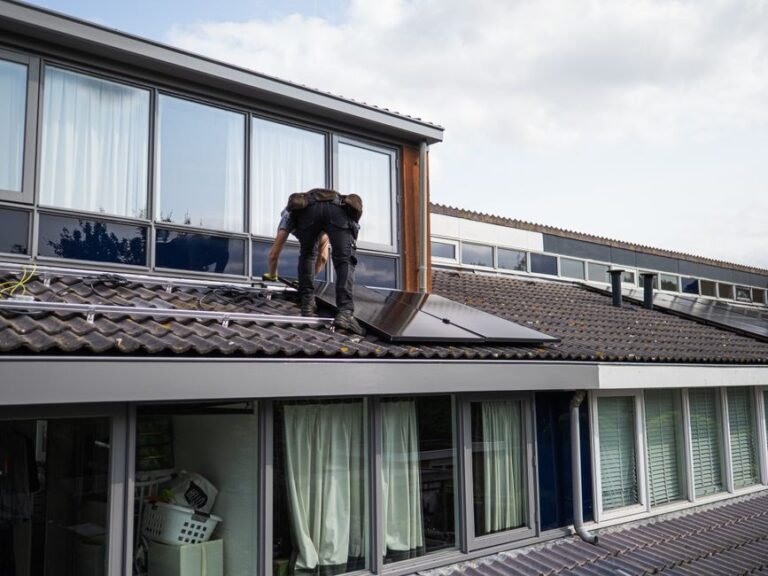
If output falls noticeably more than the warranty allows, contact the installer with your monitoring data. Don’t climb onto the roof or open junction boxes yourself; panels generate voltage whenever light hits them. Our solar installer checklist covers how to confirm who handles warranty claims before you sign.
The U.S. Department of Energy has background on what happens to panels at the end of their working life in its overview of end-of-life management for solar photovoltaics.
Before you sign, ask the installer to show their savings estimate with degradation included, and compare it against the warranty floor rather than the brochure.