Timing Belt vs Timing Chain: What It Means for Your Maintenance Bill
A timing belt and a timing chain do the same job, but only one of them comes with an expiration date. A belt needs replacing on a set schedule — usually somewhere in the range of 60,000 to 100,000 miles depending on the manufacturer — while a chain is generally designed to last the life of the engine under normal conditions.
What each part does
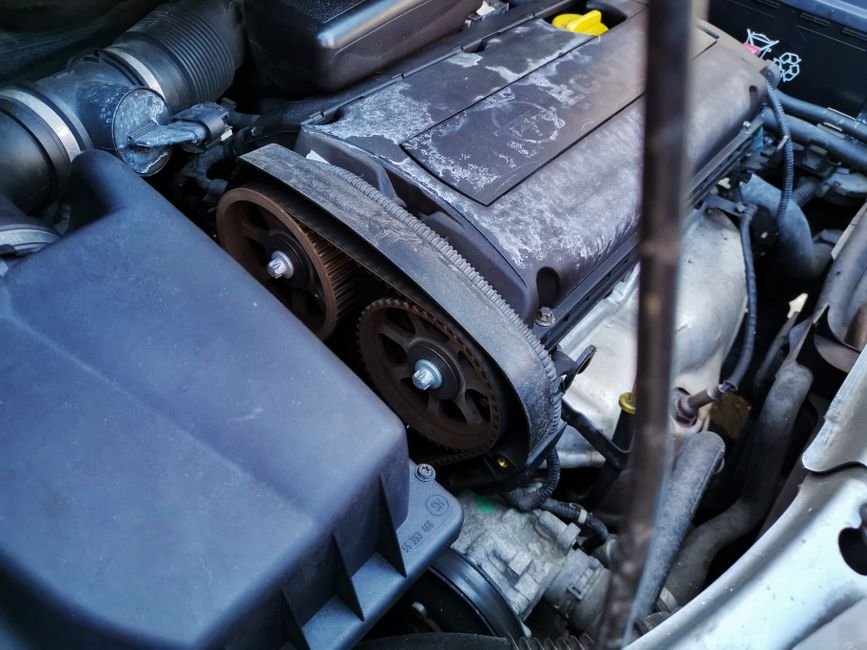
Both keep the engine’s camshaft and crankshaft rotating in sync so the valves open and close at the right time. A belt is reinforced rubber and wears out predictably; a chain is metal and more durable, but it isn’t literally maintenance-free — it can stretch or wear over a very long service life, just much more slowly. Some manufacturers describe their chains as “lifetime” components for exactly this reason, though lifetime in that context means the design life of the engine, not a literal guarantee it will never need attention under any circumstances.
Why the difference bites at higher mileage
A belt that isn’t replaced on schedule doesn’t always wear out gradually with warning — in many engines it can snap suddenly, and depending on the design, that can cause serious internal damage if pistons and valves collide. A chain failure is rarer but tends to come with less warning, often signaled by a rattling noise at startup. Your owner’s manual or the manufacturer’s maintenance schedule will tell you which one your engine has, and if it’s a belt, the recommended interval — this varies significantly by engine, not just by model year, so don’t guess based on the car’s age alone. Interference engines — where the pistons and valves occupy the same space at different points in the rotation — are the ones where a snapped belt causes the worst damage; non-interference engines can survive a belt failure with far less consequence, though neither is a reason to skip the service.
What this means for your budget
- If you have a belt, budget for its replacement at the manufacturer’s interval, not when it fails.
- Ask about chain condition on a used car with high mileage — a startup rattle is worth having checked.
- Factor this into a used car’s total cost of ownership, not just its purchase price.
For general vehicle maintenance and emissions information, see the EPA. If you’re budgeting for a car you’re about to buy, our guide to reading a used car’s maintenance history covers what else to check, and our piece on why resale value drops fastest in the first three years is worth reading before you sign anything.
Treat the manufacturer’s belt interval as a deadline, not a suggestion — that’s the one number on this list you don’t want to test.